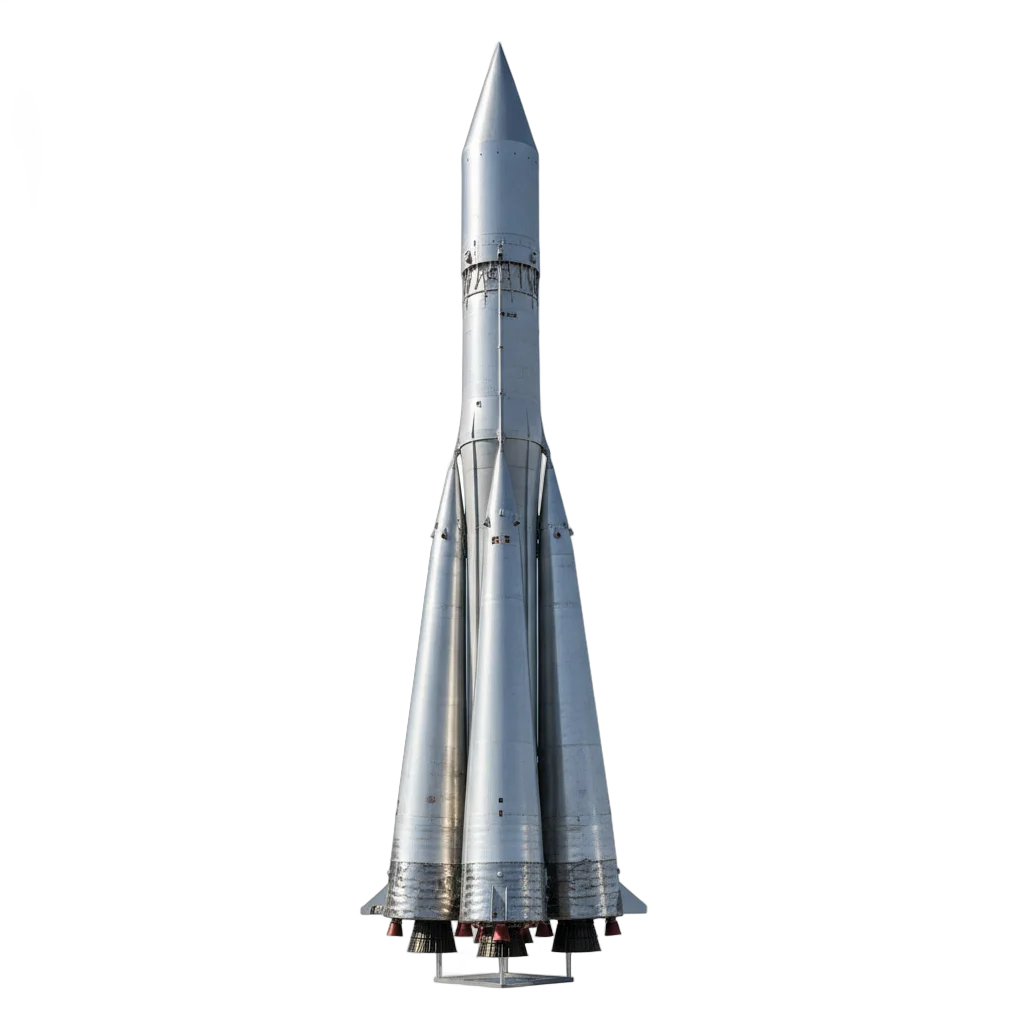
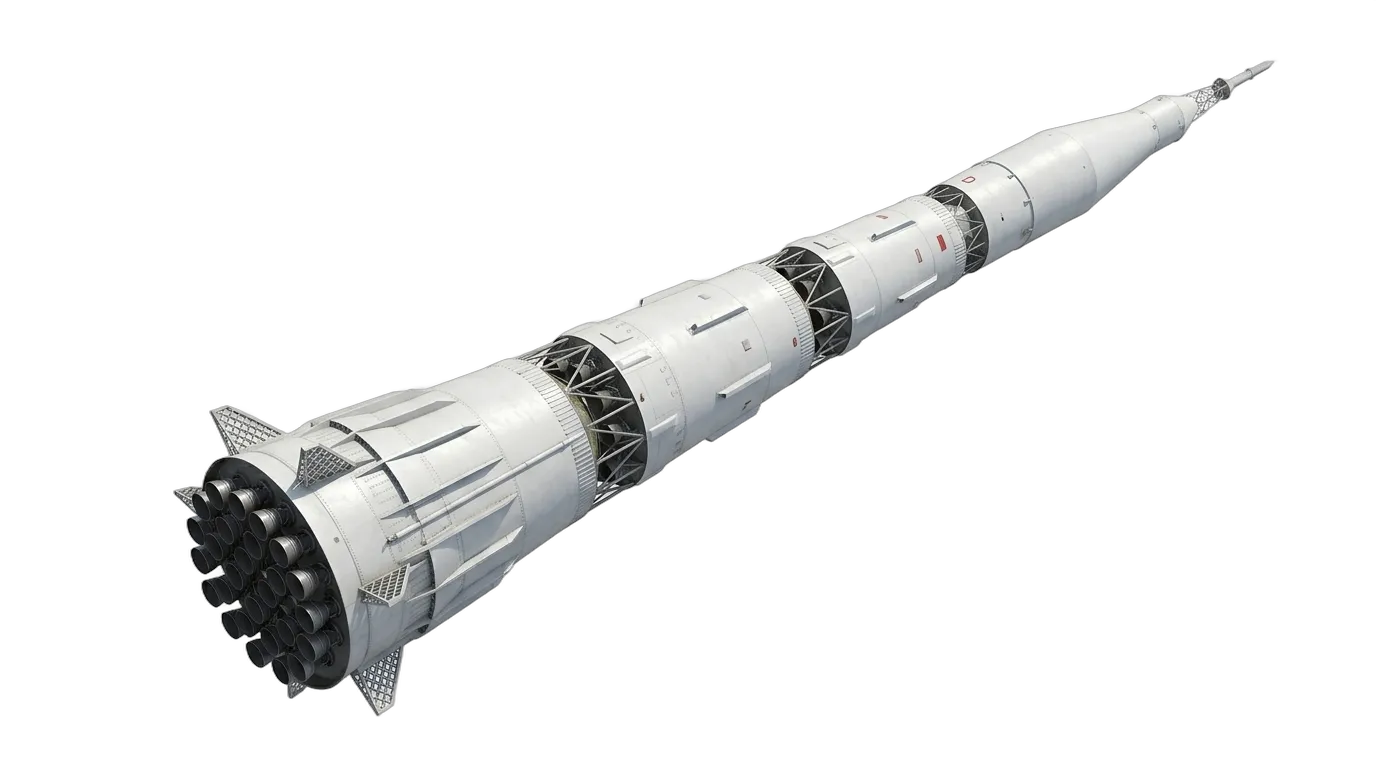
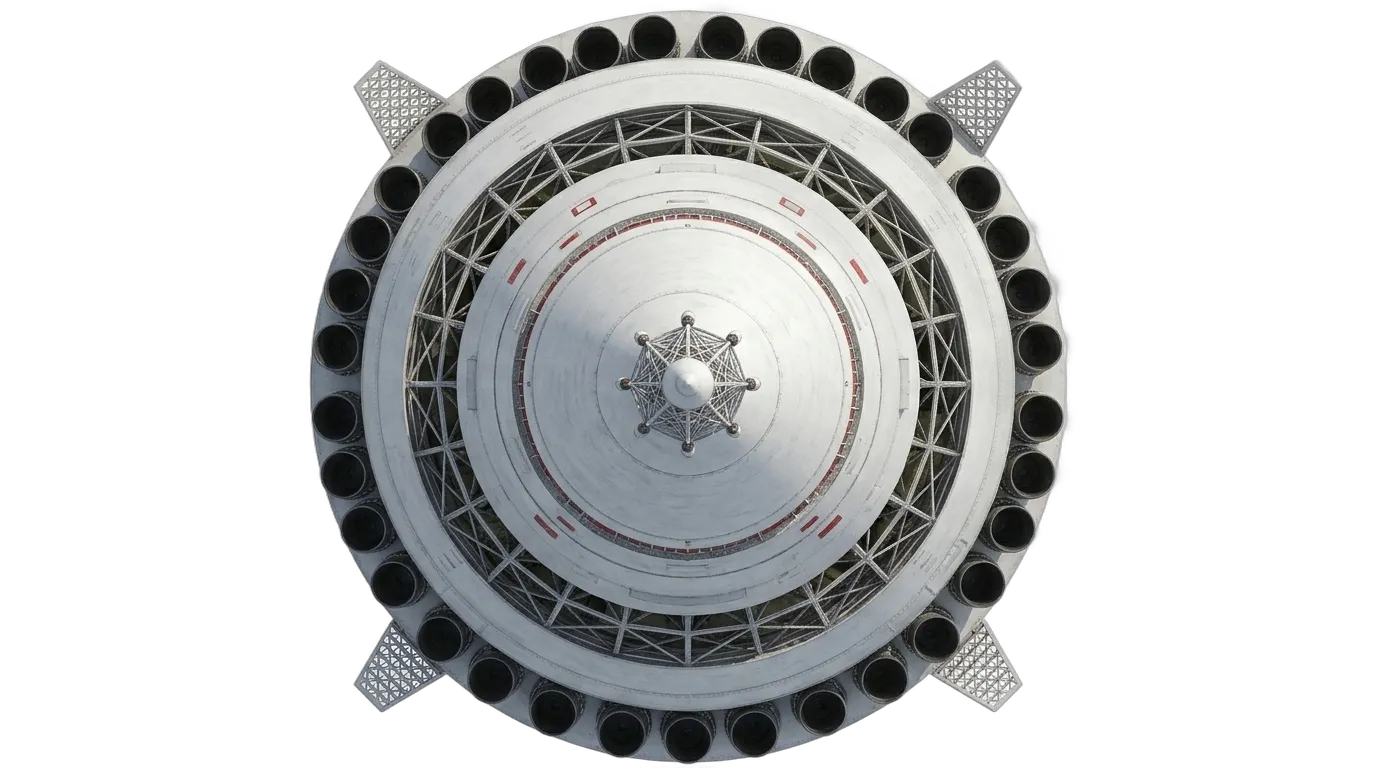
The Soviet Moon rocket, designed to match and exceed Saturn V. Its 30 first-stage engines proved fatally complex. All four launch attempts failed, including one that produced the largest non-nuclear explosion in history. The program was secretly cancelled.
History
The N1 was the Soviet Union''s answer to Saturn V, intended to carry cosmonauts to the Moon aboard the LOK/LK spacecraft system. Standing 344 feet tall -- slightly taller than Saturn V -- it was designed to lift 95 tonnes to low Earth orbit, not quite matching its American rival but sufficient for a lunar landing mission.
The N1''s critical challenge was its first stage, Block A, which used 30 NK-15 engines -- an unprecedented number. The Soviets lacked the technology to build engines as large as the F-1, so Korolev''s team opted for many smaller engines. The complexity proved fatal. The interactions between 30 engines in close proximity created vibration, acoustic, and propellant flow problems that were nearly impossible to test on the ground.
All four launch attempts ended in failure. The first, on February 21, 1969, ended when the engine control system shut down all 30 engines just 69 seconds after liftoff. The second attempt, on July 3, 1969 -- just two weeks before Apollo 11 -- was catastrophic: an engine exploded on the pad, and the fully fueled rocket collapsed back onto the launch complex in what is considered the largest non-nuclear explosion in history, destroying the launch pad and damaging facilities two miles away.
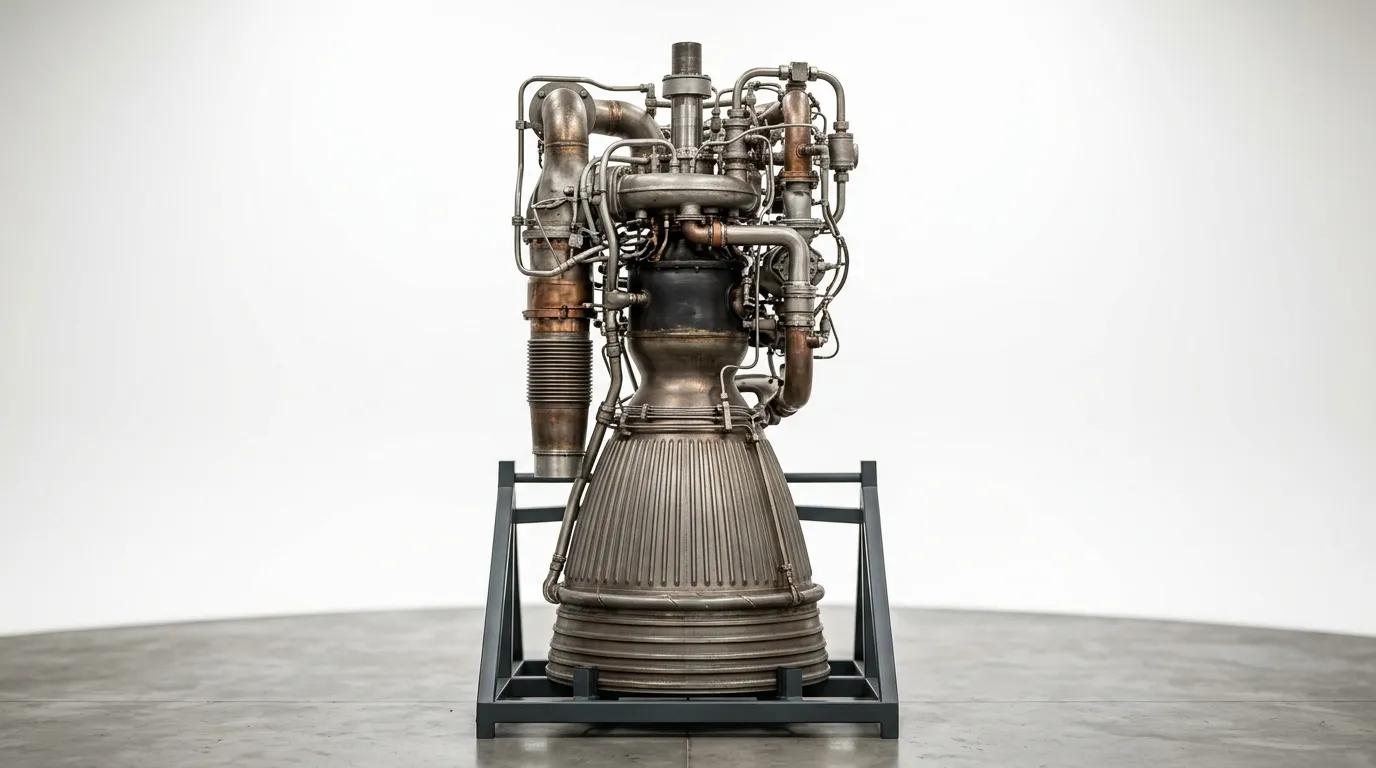
Two more attempts in 1971 and 1972 also failed, and the program was secretly cancelled in 1974. The Soviet Union never publicly acknowledged the N1''s existence until the late 1980s. Remaining hardware was scrapped, and the engines -- which were actually well-designed individually -- were stored in warehouses for decades before being acquired by American company Aerojet Rocketdyne, who used the NK-33 design as the basis for the AJ-26 engine.
Timeline
Launch Heritage
- All 4 launches failed (1969-1972)
- 2nd launch caused one of largest non-nuclear explosions
- Program cancelled in 1974, never flew successfully
Technical Specifications
Propulsion
Performance
Dimensions
Mass
Mission
Power & Systems
Source: Encyclopedia Astronautica
Tags
Designed by Sergei Korolev / Vasily Mishin