Ingenuity
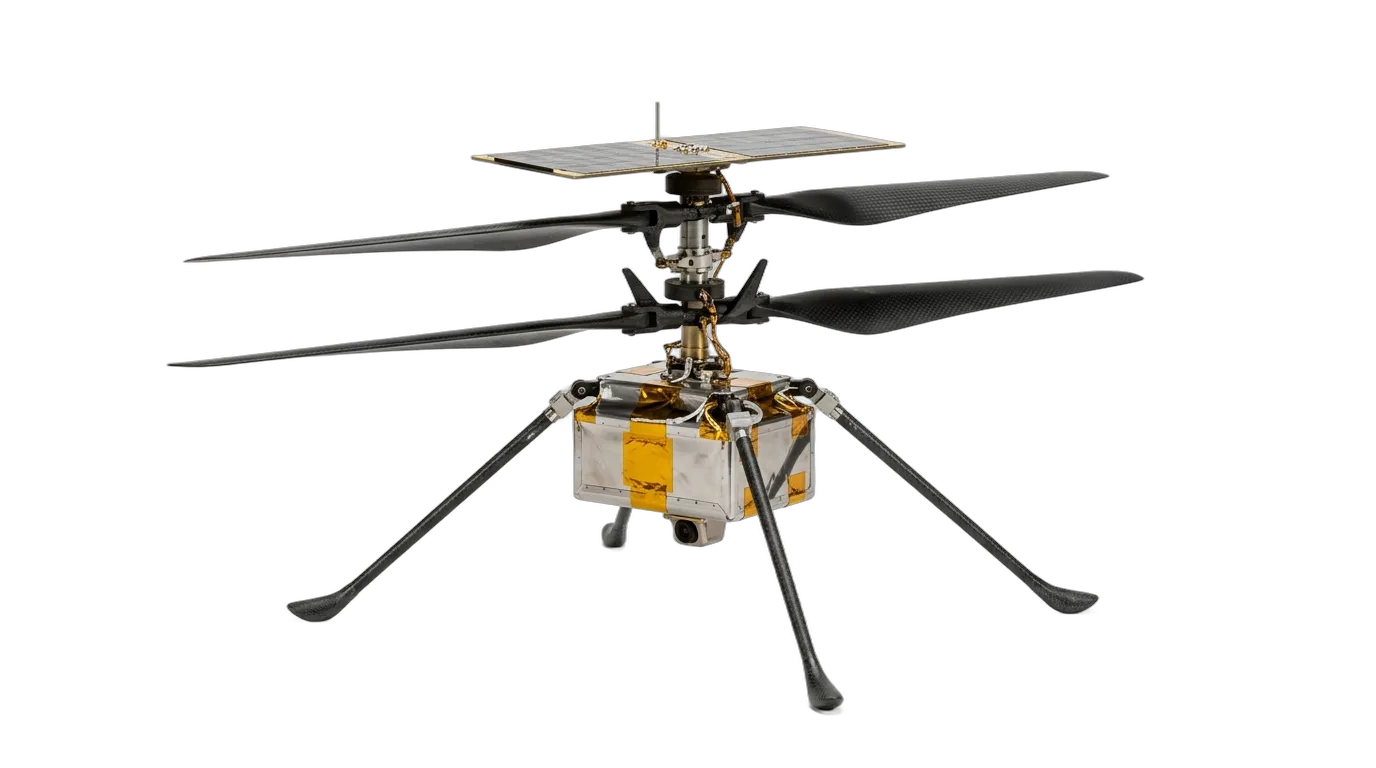
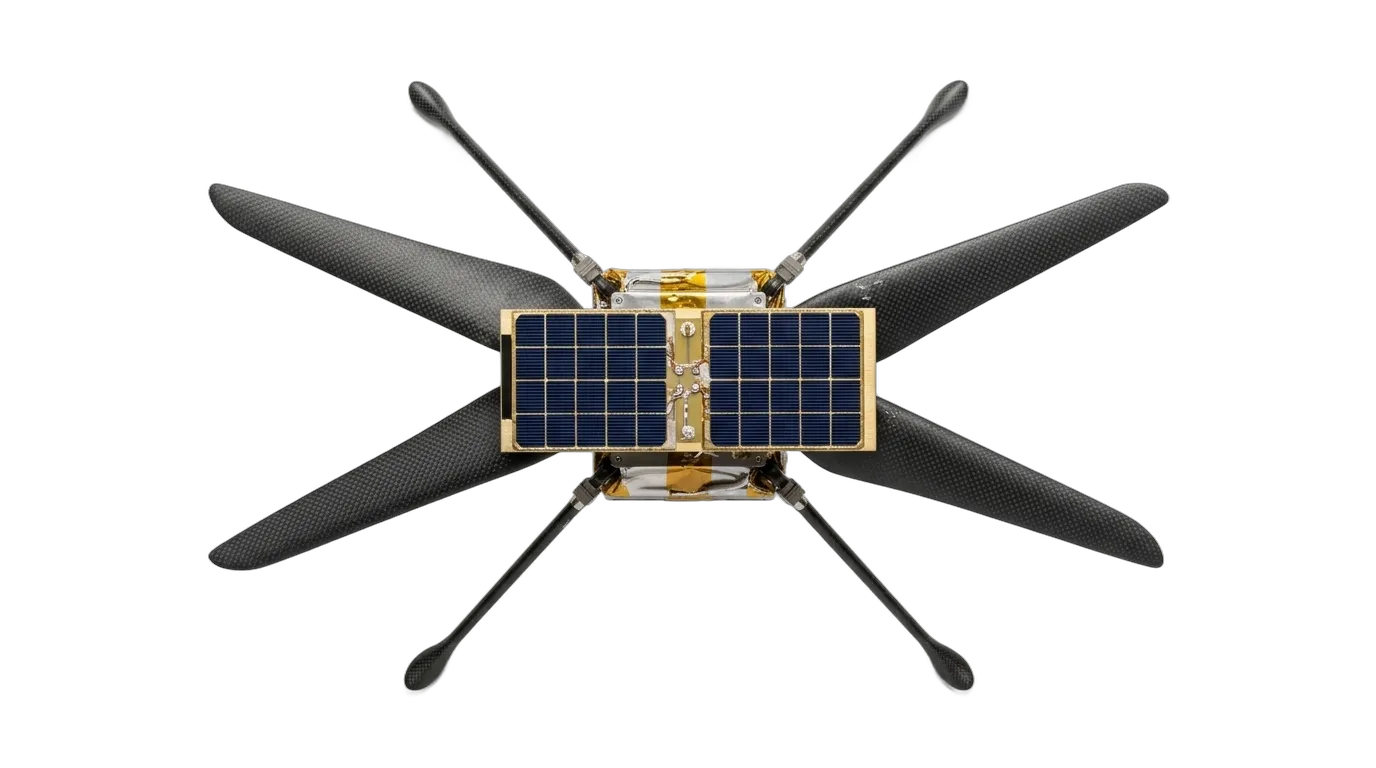
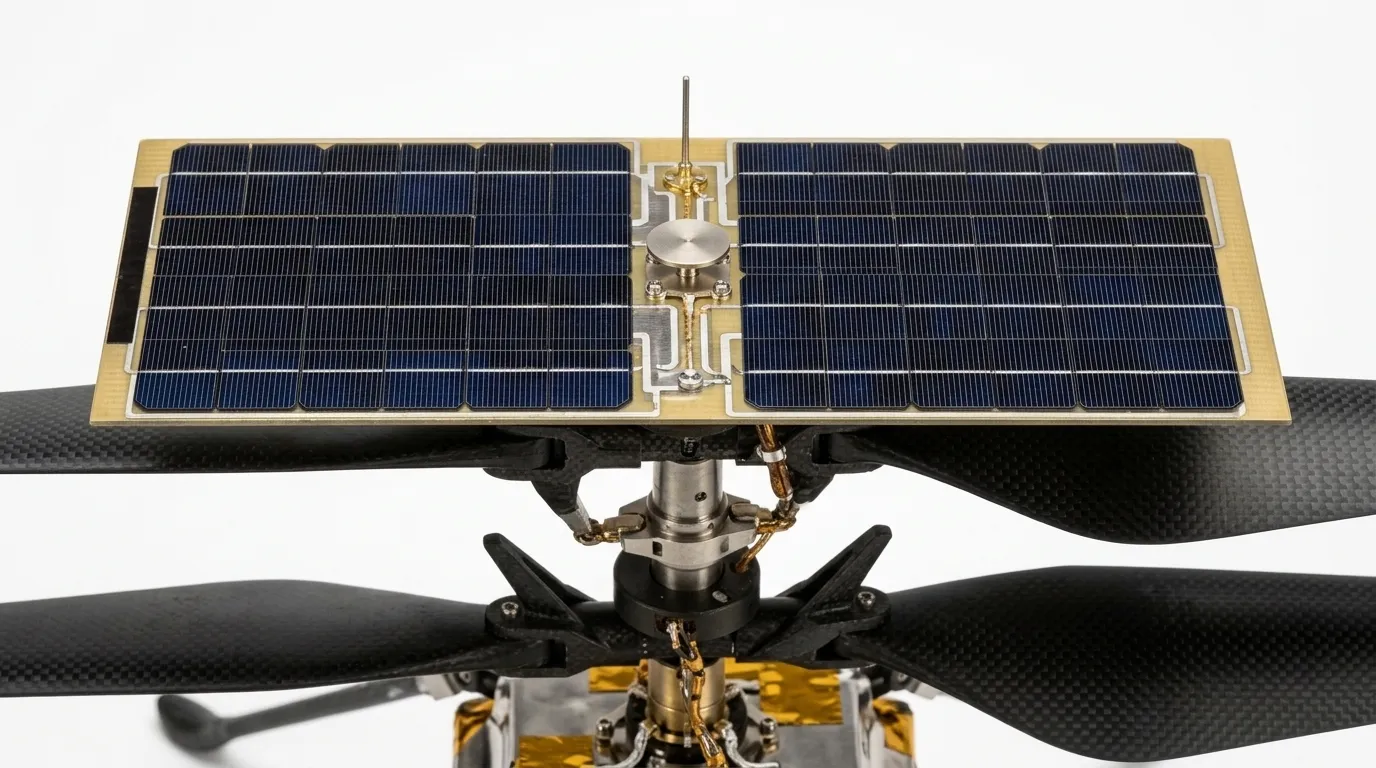
The first powered aircraft to fly on another planet. Designed for five flights, Ingenuity completed 72 over nearly three years, fundamentally proving that aerial exploration of Mars is possible.
History
Ingenuity is a 4-pound solar-powered helicopter carried to Mars attached to the belly of the Perseverance rover. Its mission was classified as a technology demonstration with modest goals: prove that powered flight was possible in the thin Martian atmosphere, where surface pressure is about 1% of Earth''s. Five flights were planned over a 30-day window.
Flying on Mars presents extraordinary challenges. The thin atmosphere means the rotor blades must spin at roughly 2,400 RPM -- about five times faster than a helicopter on Earth. The 14-minute communication delay means the helicopter cannot be piloted in real time; it must fly autonomously using onboard sensors and pre-programmed flight plans. Temperatures drop to minus 130 degrees Fahrenheit at night, threatening the helicopter''s electronics.
Ingenuity''s first flight on April 19, 2021, lasted 39 seconds and reached an altitude of 10 feet. It was the first powered, controlled flight on another planet -- a Wright Brothers moment for interplanetary aviation. NASA declared the technology demonstration a success after five flights, then extended the mission as an operational scout for Perseverance.
Over the following three years, Ingenuity completed 72 flights, covering over 11 miles of total distance and reaching altitudes of up to 79 feet. It transitioned from technology demonstration to operational pathfinder, scouting routes and scientifically interesting targets for the rover. The mission ended in January 2024 when a rotor blade was damaged during landing. Ingenuity''s success exceeded every expectation and opened the door for larger, more capable aircraft on future Mars missions.
Timeline
Launch Heritage
- First powered flight on another planet
- 72 flights total
- Scout for Perseverance
Technical Specifications
Performance
Dimensions
Mass
Mission
Power & Systems
Source: NASA/JPL
Tags
Designed by NASA/JPL / AeroVironment / MiMi Aung