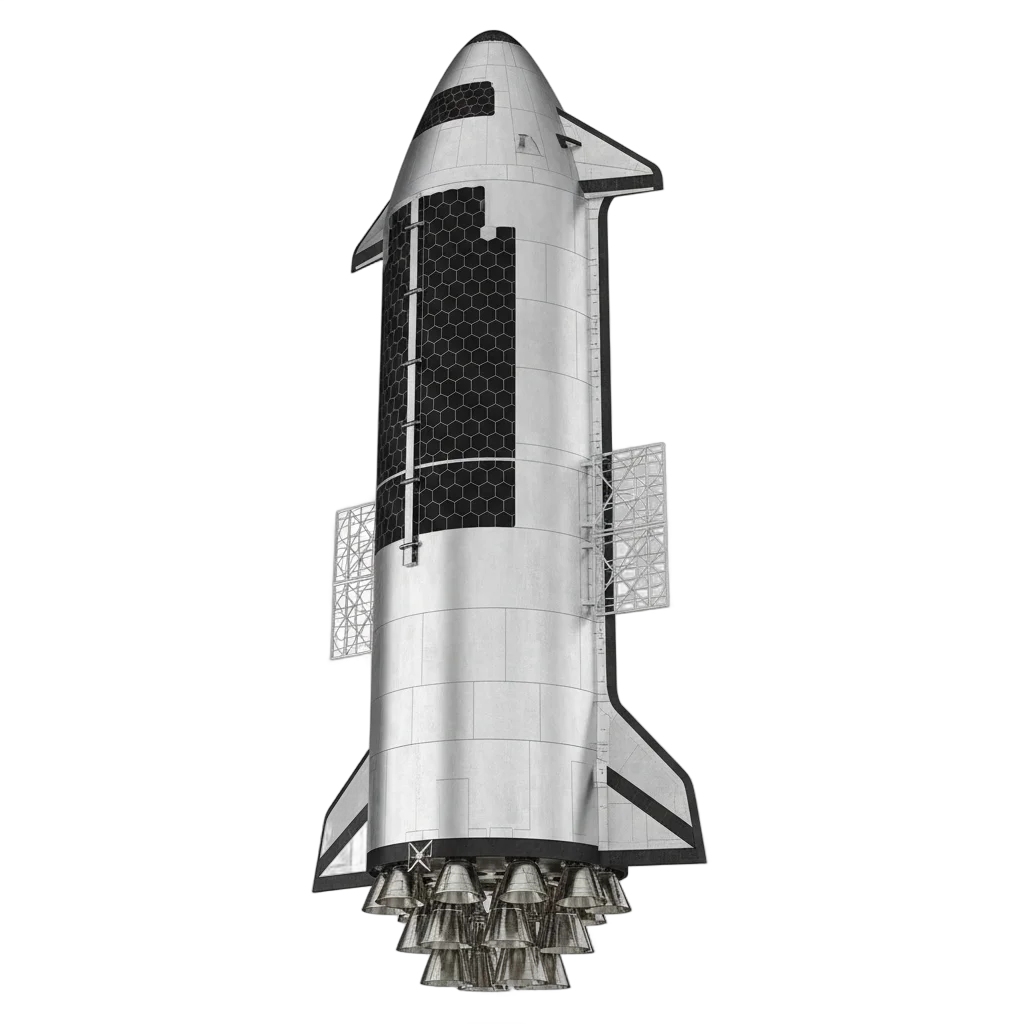
Why Starship Changes Everything: The Economics of Full Reusability
The history of spaceflight is the history of cost per kilogram to orbit. Every order-of-magnitude drop unlocked entirely new markets. Starship aims for the biggest drop yet.
Introduction
There is a number that determines what is possible in space, and it is not thrust, or specific impulse, or delta-v. It is cost per kilogram to low Earth orbit. Everything else follows from it.
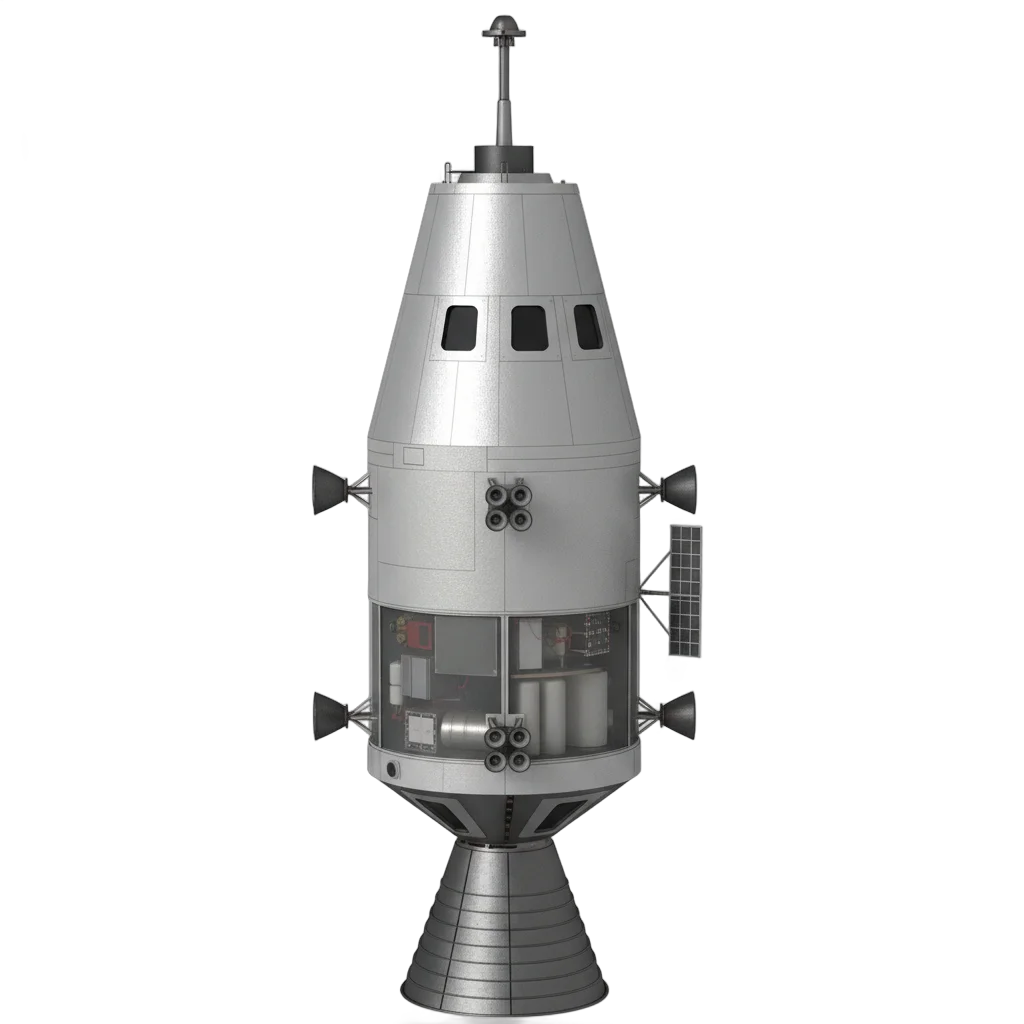
The Saturn V, adjusted for inflation, delivered payload to orbit at roughly $54,500 per kilogram. At that price, you could send government astronauts to the Moon, but you could not build a space economy. The Space Shuttle was supposed to fix this. It didn't. Despite being partially reusable, the Shuttle's turnaround costs were so high that each flight cost approximately $1.5 billion, translating to about $27,000 per kilogram. Better than Saturn V, but not enough to change the economics of space fundamentally.
The Cost Curve
Falcon 9 shattered the curve. By reusing first-stage boosters -- flying individual boosters twenty or more times each -- SpaceX drove the cost to roughly $2,720 per kilogram. At that price, commercial satellite constellations became viable. Starlink, a network of over 6,000 satellites providing global internet, exists only because Falcon 9 made it cheap enough to launch hundreds of satellites per year. At Saturn V prices, Starlink would have cost more than the GDP of most nations.
Starship's target is $200 per kilogram or less. If achieved, this would represent a 270-fold reduction from the Saturn V era and a 13-fold reduction from Falcon 9. Each drop has historically opened entirely new categories of activity in space. The jump from Saturn V to Shuttle made space stations viable. The jump from Shuttle to Falcon 9 made satellite mega-constellations viable. The jump to Starship would make almost everything else viable.
What $200/kg Enables
At $200 per kilogram, space stations become hotels. Orbital manufacturing of fiber optics, pharmaceuticals, and semiconductors -- processes that benefit from microgravity -- become cost-competitive with terrestrial factories. Lunar bases can be supplied like Antarctic research stations, with regular cargo runs rather than once-a-decade expeditions. Mars colonization shifts from a physics problem to a logistics problem: the rocket exists, the question becomes how many flights per year to sustain a settlement.
This is not speculation. It is the same pattern that transformed aviation. In the 1920s, flying was for mail, the military, and the rich. By the 1960s, cost per passenger-mile had dropped below the threshold that made mass air travel possible, and the airline industry exploded. The barrier was never physics -- heavier-than-air flight was demonstrated in 1903. The barrier was economics.
The Airplane Analogy
Expendable rockets are single-use airplanes. You build a Boeing 787 for $300 million, fly it once from New York to London, and crash it into the Atlantic. Then you build another one. No airline could survive this model, and no industry can thrive on it.
Falcon 9 proved that rockets can be more like aircraft: fly, land, inspect, refuel, fly again. But Falcon 9 only reuses the first stage. The upper stage is still expendable, like an airplane that throws away its wings after every flight. Starship aims to reuse everything. Both stages. Every flight. Land, refuel, launch again within hours rather than weeks.
The global space economy is worth approximately $400 billion per year, driven primarily by satellite communications and government programs. Industry projections suggest this could grow to $1 trillion by the mid-2030s. If Starship achieves its cost targets, the ceiling disappears. When access to orbit costs what a cargo ship costs rather than what a spacecraft costs, space becomes infrastructure. And infrastructure changes everything.