The Golden Record: A Message in a Bottle for the Cosmos
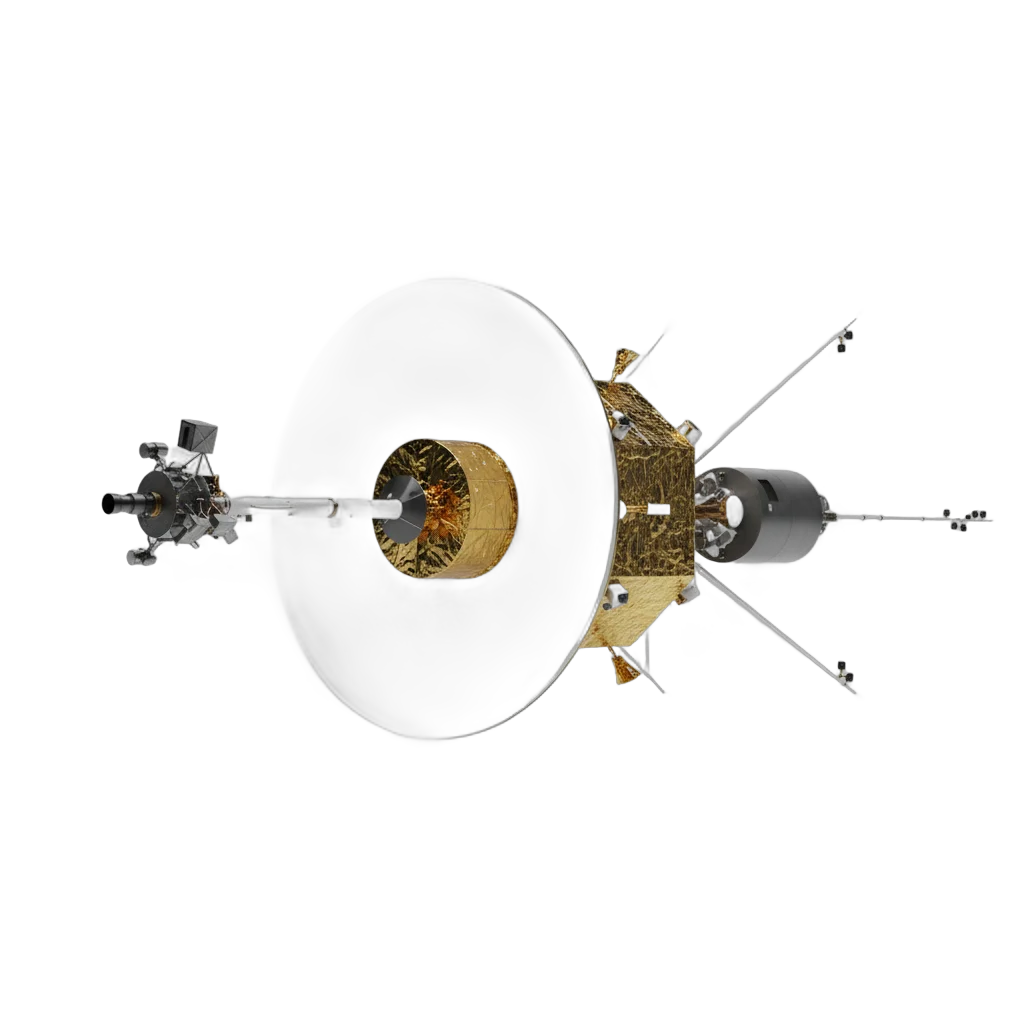
In 1977, NASA bolted a gold-plated phonograph record to two spacecraft and launched them into the void. On it: the sounds, images, and music of a civilization introducing itself to the universe.
Introduction
In the spring of 1977, with the Voyager spacecraft months from launch, NASA asked astronomer Carl Sagan to assemble a message that would travel with the probes into interstellar space. The assignment was simple and impossible: represent all of humanity on a single 12-inch gold-plated copper phonograph record. Sagan had six weeks.
Sagan's Committee
Sagan assembled a small committee that included writer Ann Druyan, artist Jon Lomberg, and science journalist Timothy Ferris. The debates were immediate and endless. Which music? Whose language? Which images? Every choice was a statement about what mattered, and every omission was a judgment. The Beatles wanted to include "Here Comes the Sun," but EMI, which owned the rights, refused -- licensing music for extraterrestrial distribution was apparently not covered in the standard contract.
The committee worked around the clock, fighting over whether to include images of war and poverty (they decided not to -- the record was an introduction, not a confession). They argued about which scientific concepts to encode, how to represent human reproduction without offending 1970s sensibilities, and whether Chuck Berry's "Johnny B. Goode" counted as serious enough for an interstellar message. Sagan reportedly said that if the aliens didn't appreciate rock and roll, we didn't want to know them anyway.
What's on the Record
The finished record contains 115 images encoded as analog audio signals, from the structure of DNA to the Great Wall of China, from a woman nursing a baby to a diagram of the solar system. Greetings in 55 languages range from ancient Sumerian to modern Wu Chinese. A child's voice says, in English, "Hello from the children of planet Earth."
Ninety minutes of music span the globe and centuries of human creativity: Bach's Brandenburg Concerto No. 2, Beethoven's Fifth Symphony and String Quartet No. 13, Stravinsky's "Rite of Spring," Chuck Berry's "Johnny B. Goode," Blind Willie Johnson's "Dark Was the Night, Cold Was the Ground," Peruvian pan pipes, Javanese gamelan, and Azerbaijani bagpipes. The Sounds of Earth section includes thunder, wind, birds, whales, a pulsar, a mother's first words to her newborn child, and the sound of a kiss.
The most personal entry belongs to Ann Druyan. Her brainwaves were recorded by an EEG for an hour while she meditated on a series of topics -- the history of Earth, human civilization, what it was like to fall in love. She had fallen in love with Carl Sagan two days before the recording. They told no one. The electrical patterns of a woman's brain thinking about new love are now traveling through interstellar space at 38,000 miles per hour.
A Billion-Year Voyage
The record's aluminum cover is etched with instructions for playback, using the hydrogen atom's spin-flip transition as a universal unit of time. A pulsar map shows Earth's position relative to 14 pulsars, giving any finder a way to locate where the record came from and when it was launched. The record is expected to survive for a billion years in the vacuum of space -- long enough to outlast the Earth itself.
Voyager 1 is now more than 15 billion miles from Earth, moving at roughly 38,000 mph. It will pass within 1.6 light-years of the star Gliese 445 in about 40,000 years. The probability of anyone or anything ever finding the Golden Record is effectively zero. Carl Sagan knew this. He called it a "bottle cast into the cosmic ocean." The value of the record was never in its destination. It was in the act of making it -- in the audacity of a species that looked at the infinite dark and said: we were here.