Apollo 13: The Most Successful Failure in Space History
When an oxygen tank exploded 200,000 miles from Earth, three astronauts and a room full of engineers had four days to solve a problem that nobody had imagined. They brought everyone home.
Introduction
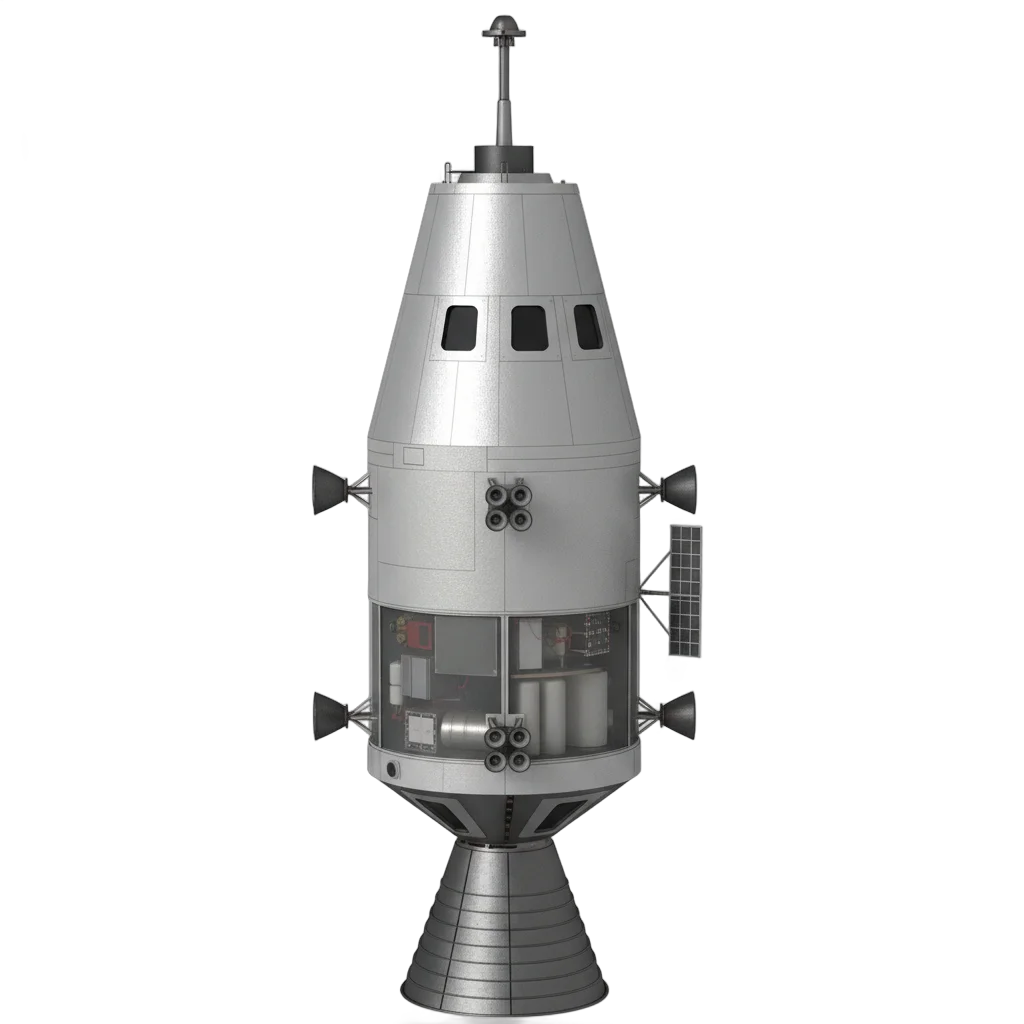
On the evening of April 13, 1970, fifty-five hours and fifty-four minutes into the mission, astronaut Jack Swigert flipped a switch to stir the oxygen tanks in the Service Module. Sixteen seconds later, oxygen tank number two exploded. The blast ruptured tank number one. Commander Jim Lovell looked out the window and saw something no astronaut ever wants to see: a cloud of gas venting into the vacuum of space. That gas was their oxygen -- not just for breathing, but for generating electricity and water through the fuel cells that powered the Command Module. Two hundred thousand miles from Earth, Apollo 13 was dying.
Swigert's transmission to Houston has been misquoted for decades. He didn't say "Houston, we have a problem." He said "Houston, we've had a problem here." The past tense was telling -- the explosion had already happened. There was nothing to prevent. There was only survival.
"Houston, We've Had a Problem"
The crew -- Lovell, Swigert, and Lunar Module Pilot Fred Haise -- watched their power and oxygen gauges falling. Within two hours, Mission Control made the call that defined the mission: abort the lunar landing, power down the dying Command Module, and move into the Lunar Module Aquarius as a lifeboat. The LM was designed to support two men for two days on the lunar surface. It now had to keep three men alive for four days in open space. The math didn't work. They would have to make it work anyway.
The Lifeboat
The carbon dioxide problem came first. The Lunar Module's lithium hydroxide canisters, which scrubbed CO2 from the air, were round. The Command Module's canisters were square. As CO2 levels climbed toward lethal concentrations, engineers on the ground built an adapter using only materials available on the spacecraft: cardboard from flight plan covers, plastic bags, and duct tape. They talked the crew through building it. It worked. The solution was ugly and improbable and it saved three lives.
The cold was next. With nearly all power shut down to preserve the batteries needed for reentry, cabin temperatures dropped to 38 degrees Fahrenheit. Condensation covered every surface. The crew, shivering in the dark, rationed water to six ounces per person per day -- one-fifth the normal intake. Haise developed a kidney infection from dehydration.
Coming Home
The crew executed a slingshot trajectory around the Moon, using lunar gravity to bend their path back toward Earth. A critical course correction burn, performed manually using the Sun as an alignment reference because the guidance computer was powered down, put them back on target. Hours before reentry, they jettisoned the battered Service Module. For the first time, they saw the damage: an entire panel had been blown away, exposing the gutted interior. Lovell later said it looked like it had been hit by a bomb.
They crawled back into the frozen Command Module, powered it up on battery reserves that were never meant to handle the load, and separated from Aquarius -- the lifeboat that had saved them. During reentry, the communications blackout lasted 87 seconds longer than expected. For a minute and a half, no one at Mission Control knew if the heat shield had held. Then three parachutes appeared on television screens, and the room erupted.
The Legacy
NASA calls Apollo 13 a "successful failure" -- the lunar landing failed, but the crew survived against extraordinary odds. The phrase "failure is not an option," attributed to Flight Director Gene Kranz, was actually invented for the 1995 film. Kranz never said it during the mission. What he did say, in a memo written afterward, was more measured and more honest: "Tough and competent." Those two words became the watchwords of Mission Control.
The lessons learned from Apollo 13 reshaped NASA's approach to redundancy, contingency planning, and crew survival. Every spacecraft built since carries the DNA of that mission's improvised solutions. The crew flew 200,000 miles to the Moon and never touched it. They came home. That was enough.