Curiosity (MSL)
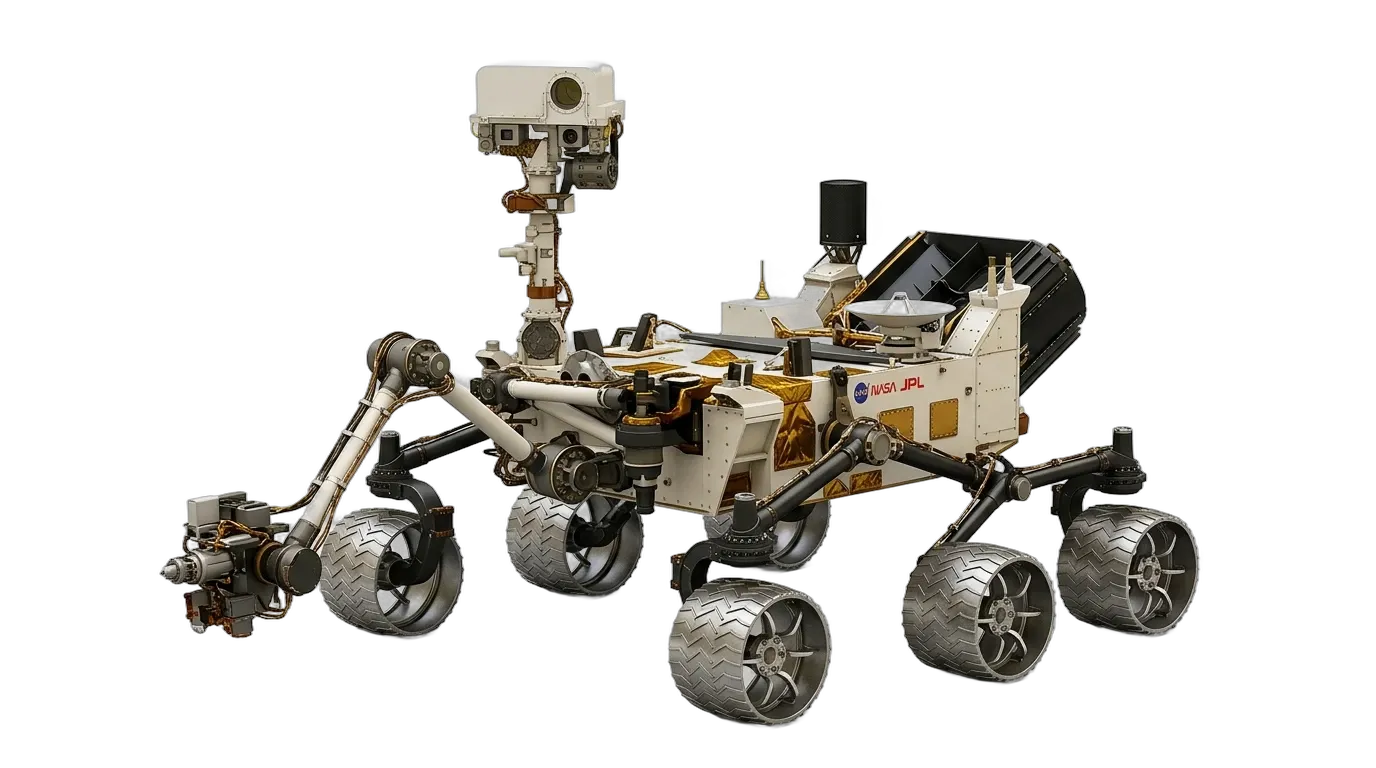
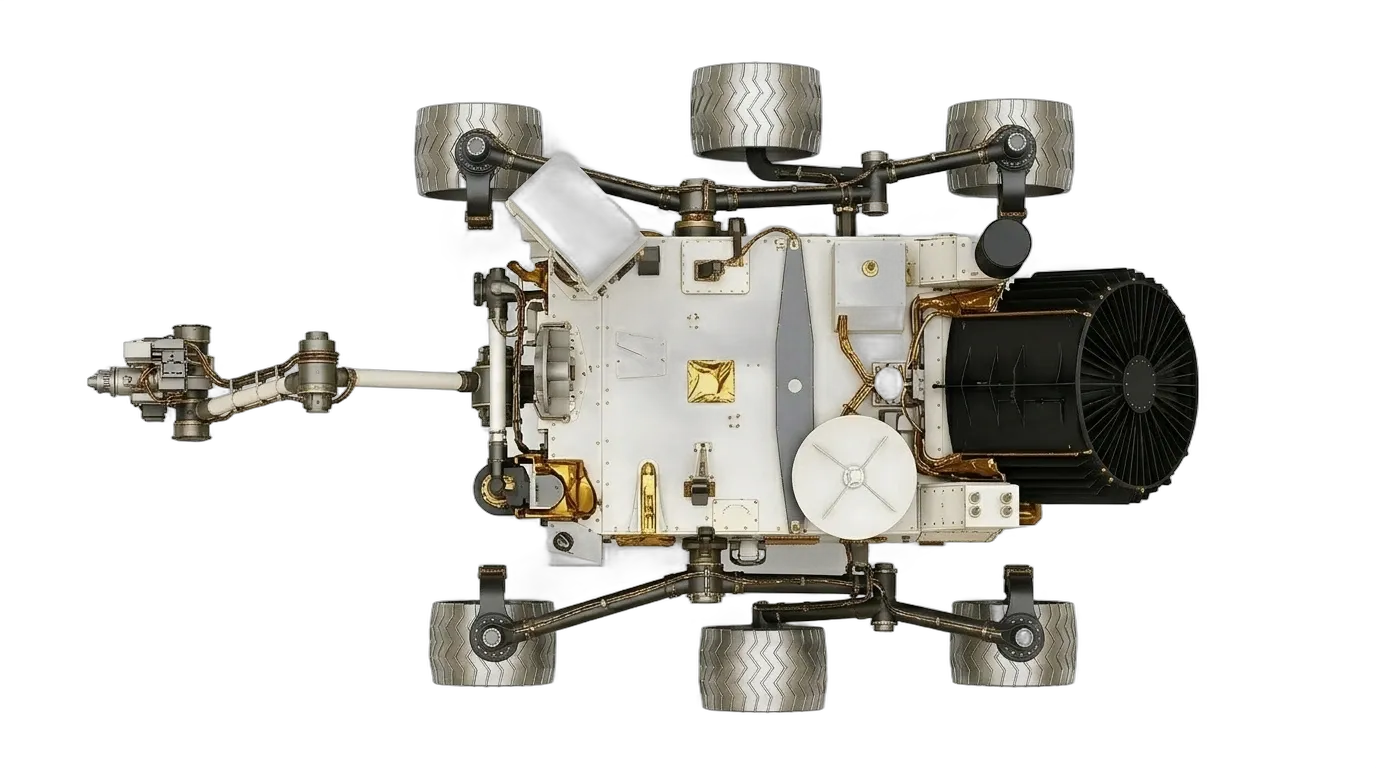
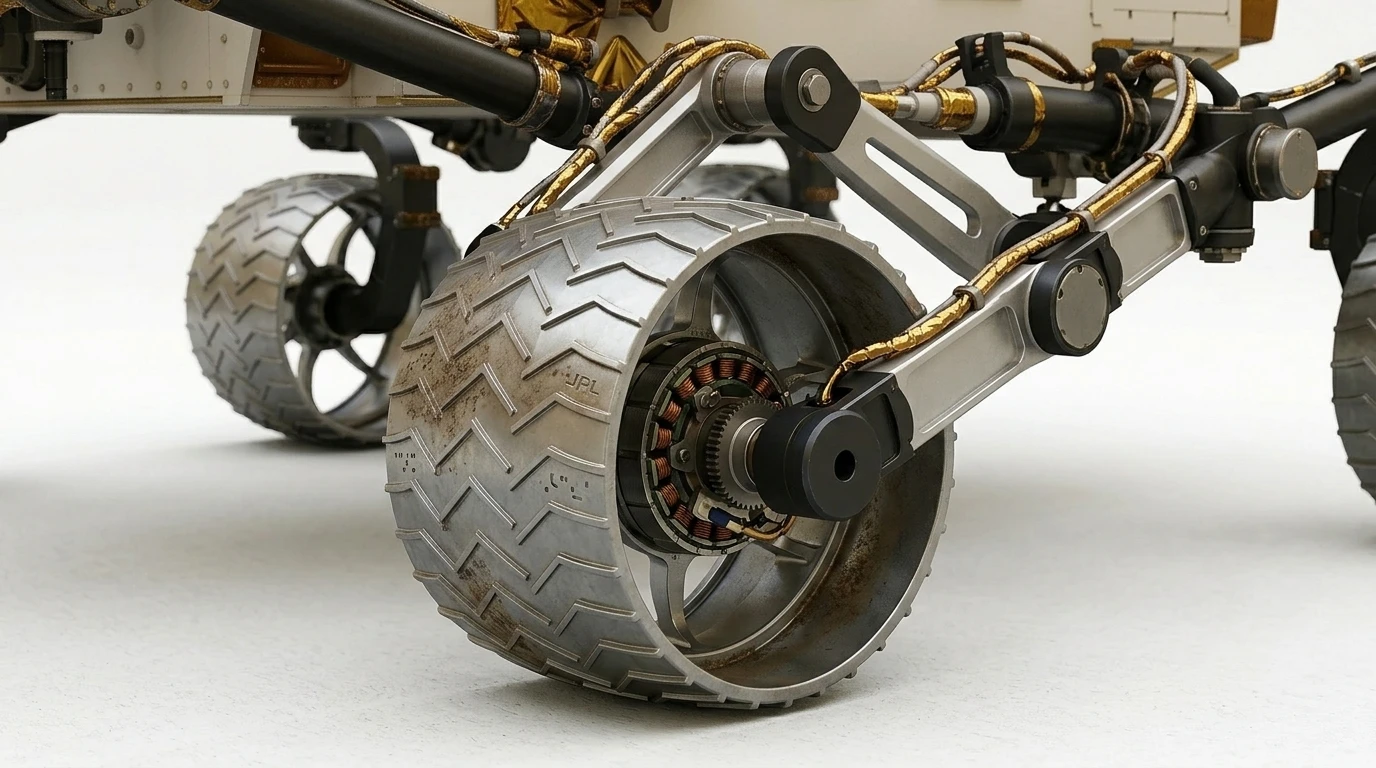
A car-sized Mars rover that confirmed Mars once had conditions suitable for microbial life. Curiosity pioneered the sky crane landing system and has been exploring Gale Crater since August 2012, powered by a nuclear battery that gives it effectively unlimited range.
History
Curiosity, formally the Mars Science Laboratory, landed in Gale Crater on August 6, 2012, using a revolutionary sky crane system that lowered the rover on cables from a hovering rocket platform. The landing sequence was so complex and risky that NASA engineers called it ''seven minutes of terror.'' It worked flawlessly, placing the one-ton rover within 1.5 miles of its target.
Unlike previous Mars rovers powered by solar panels, Curiosity carries a Multi-Mission Radioisotope Thermoelectric Generator (MMRTG) that converts the heat from plutonium-238 decay into electricity. This nuclear power source allows the rover to operate day and night, in any season, regardless of dust accumulation on solar panels -- a limitation that eventually killed both Spirit and Opportunity.
Curiosity''s primary mission was to determine whether Gale Crater ever offered environmental conditions favorable for microbial life. Within its first year, the rover found conclusive evidence of an ancient freshwater lake in Gale Crater, with clay minerals indicating water that was neither too acidic nor too alkaline for life. Subsequent years revealed organic molecules in Martian rock, seasonal methane fluctuations in the atmosphere, and evidence of ancient river systems.
The rover carries 10 scientific instruments including a laser that can vaporize rock from 23 feet away to analyze its composition (ChemCam), a drill for collecting samples from inside rocks, and an X-ray diffraction instrument for determining mineral composition. As of 2026, Curiosity has driven over 20 miles across the Martian surface, ascending the slopes of Mount Sharp in the center of Gale Crater, reading the geological history of Mars layer by layer.
Timeline
Launch Heritage
- Sky crane landing
- Gale Crater exploration
- Organic molecule discovery
- Methane detection
Technical Specifications
Performance
Dimensions
Mass
Mission
Power & Systems
Source: NASA/JPL
Tags
Designed by NASA/JPL