Chang''e 5
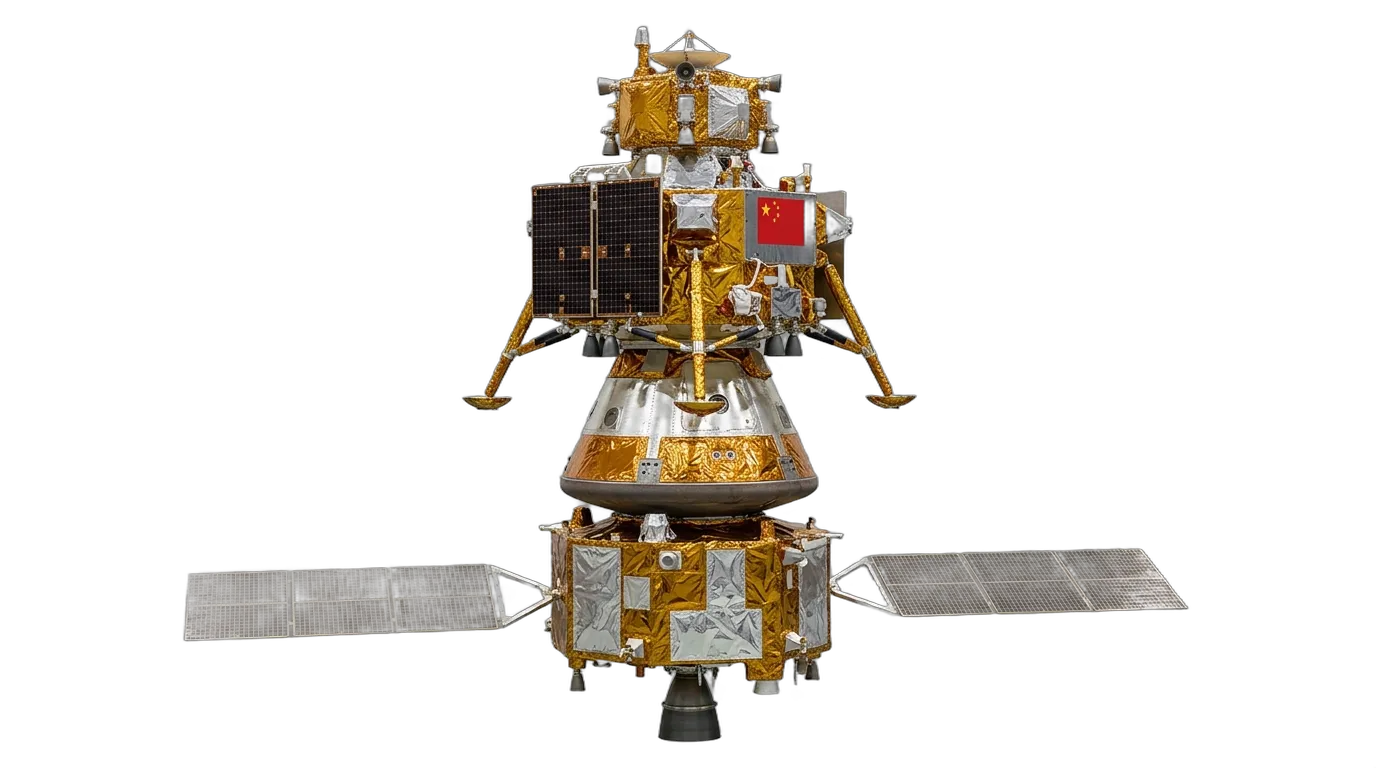
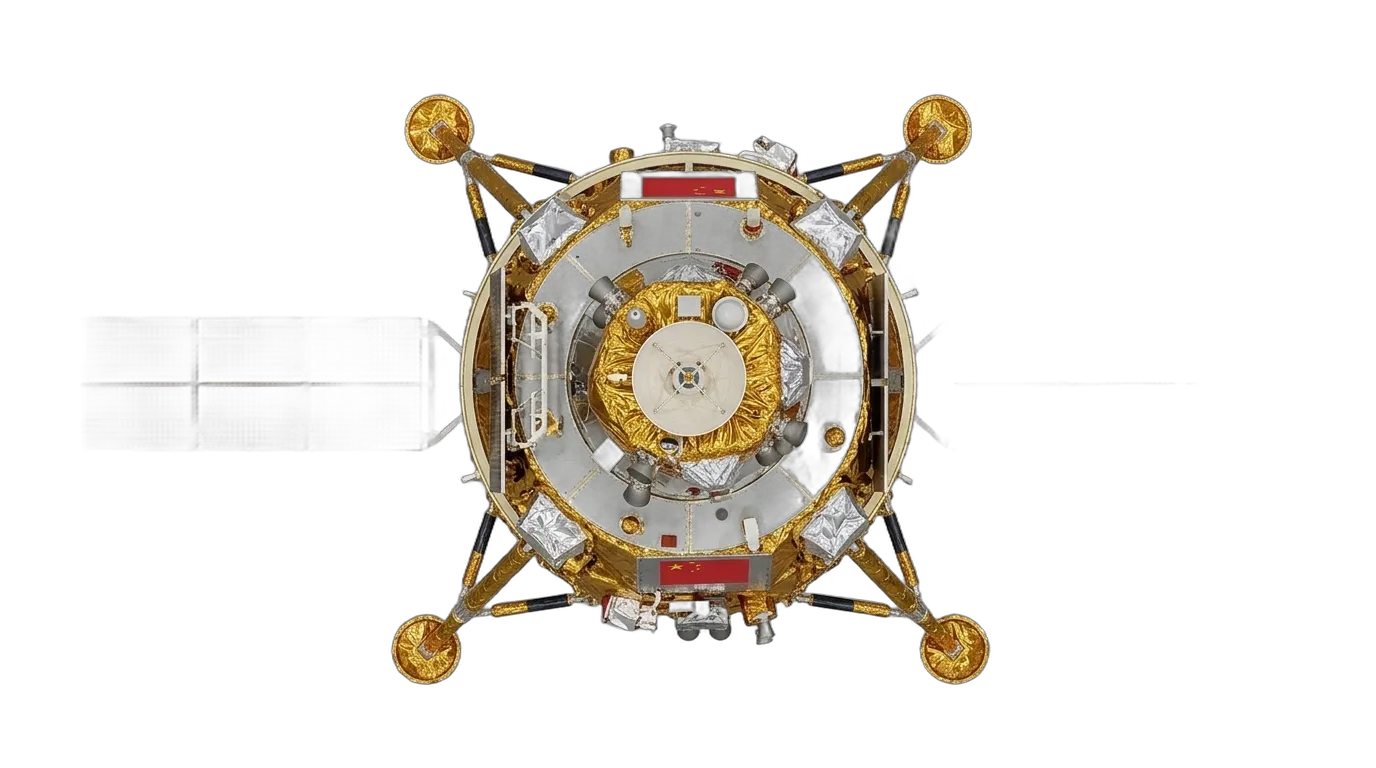
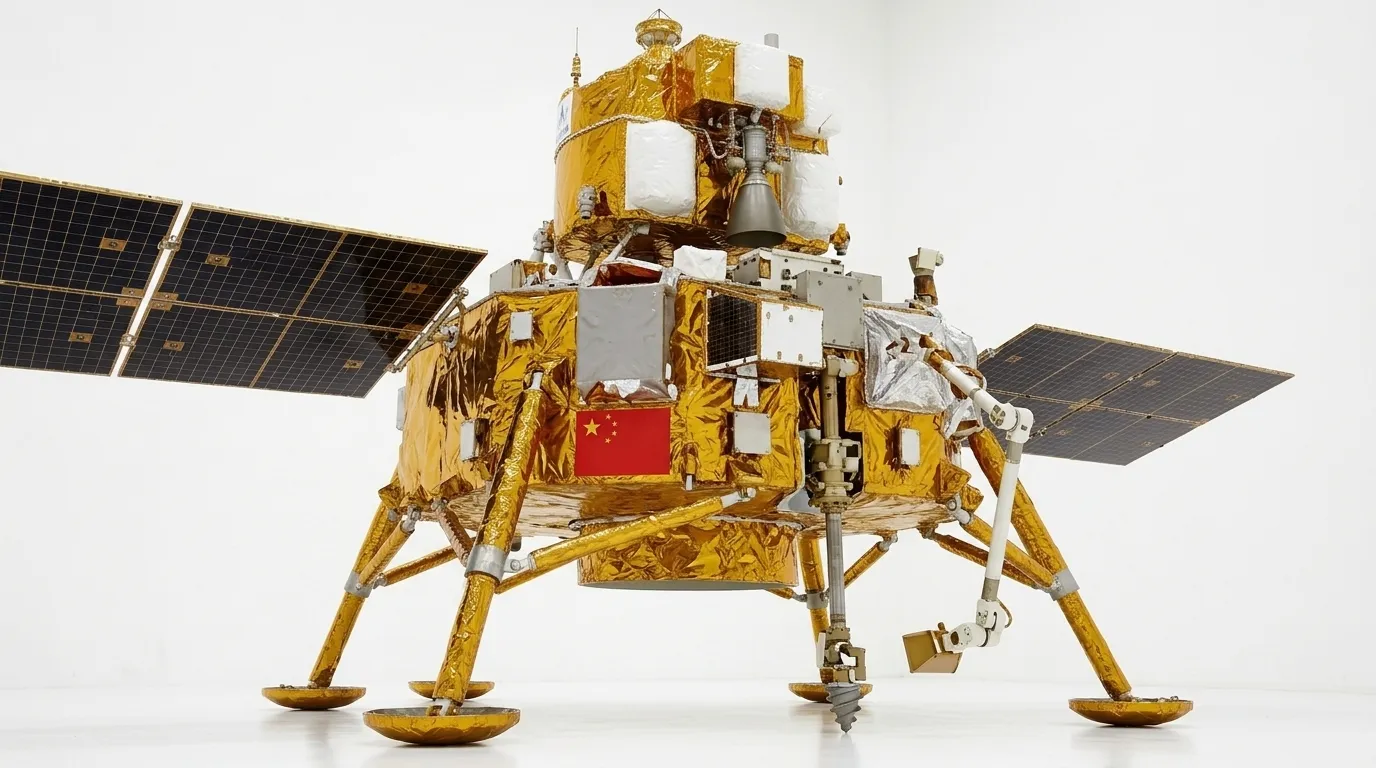
The first lunar sample return mission since the Soviet Luna 24 in 1976 -- a gap of 44 years. Chang''e 5 returned 3.82 pounds of Moon material from a previously unsampled region, revealing volcanic activity far more recent than Apollo samples suggested.
History
Chang''e 5 launched on November 23, 2020, on a Long March 5 rocket and entered lunar orbit five days later. The mission consisted of four modules: an orbiter, a lander, an ascent vehicle, and a return capsule, executing an architecture similar to Apollo but entirely robotic.
The lander touched down in Oceanus Procellarum on December 1, 2020, and immediately began collecting surface samples using a scoop and a drill that penetrated two meters into the lunar regolith. Over approximately 19 hours, the lander gathered 1,731 grams (3.82 pounds) of lunar material.
The ascent vehicle launched from the lander''s upper surface, rendezvoused and docked with the orbiter in lunar orbit, transferred the samples, then separated. The orbiter returned to Earth, releasing the sample capsule which landed in Inner Mongolia on December 16, 2020.
Analysis of the samples revealed basaltic rock dating to approximately 1.97 billion years ago, making it the youngest lunar volcanic material ever studied -- a billion years younger than the youngest Apollo samples. This discovery demonstrated that the Moon remained volcanically active far longer than previously believed, challenging existing models of lunar thermal evolution.
Launch Heritage
- First lunar sample return since 1976
- Returned 1.731 kg of lunar soil
- Autonomous lunar orbit rendezvous
Technical Specifications
Propulsion
Dimensions
Mass
Mission
Power & Systems
Source: CNSA
Tags
Designed by CAST / CNSA