Hubble Space Telescope
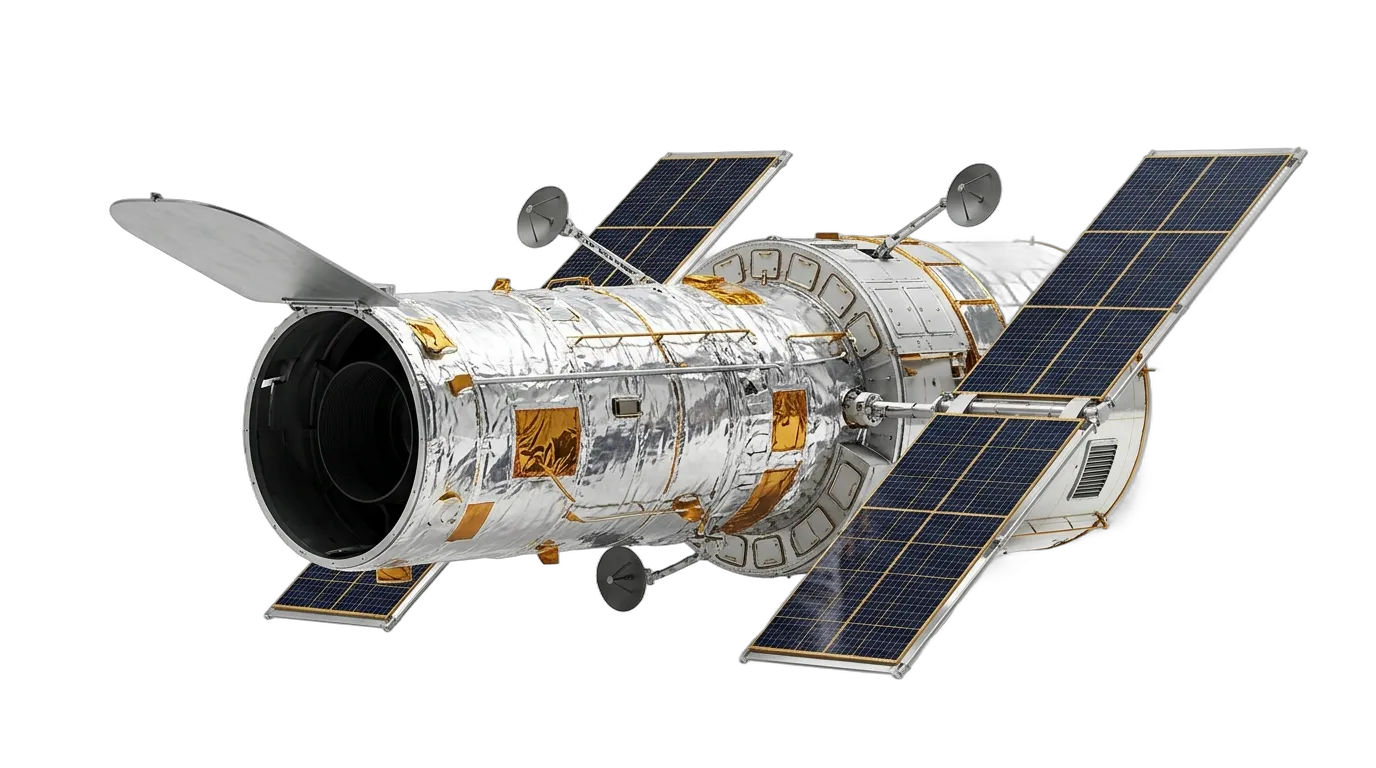
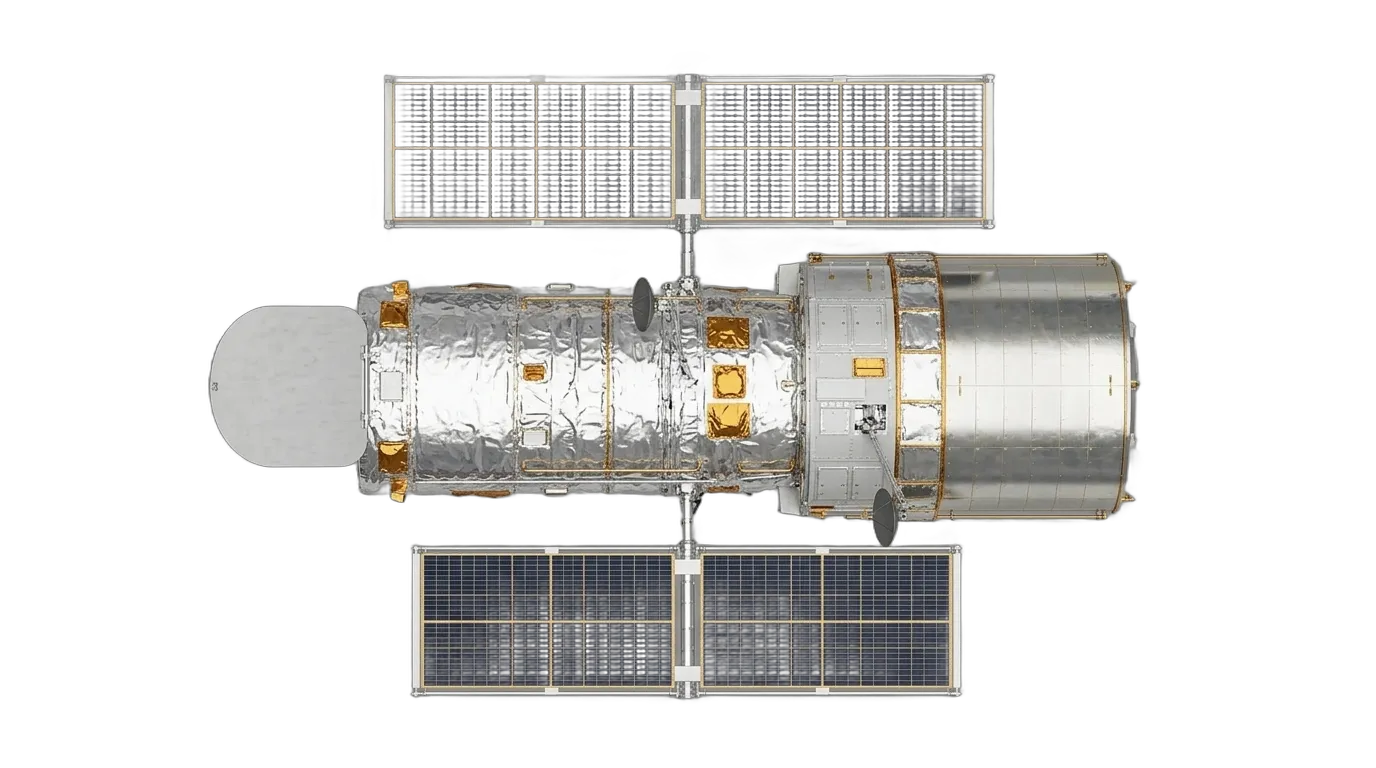
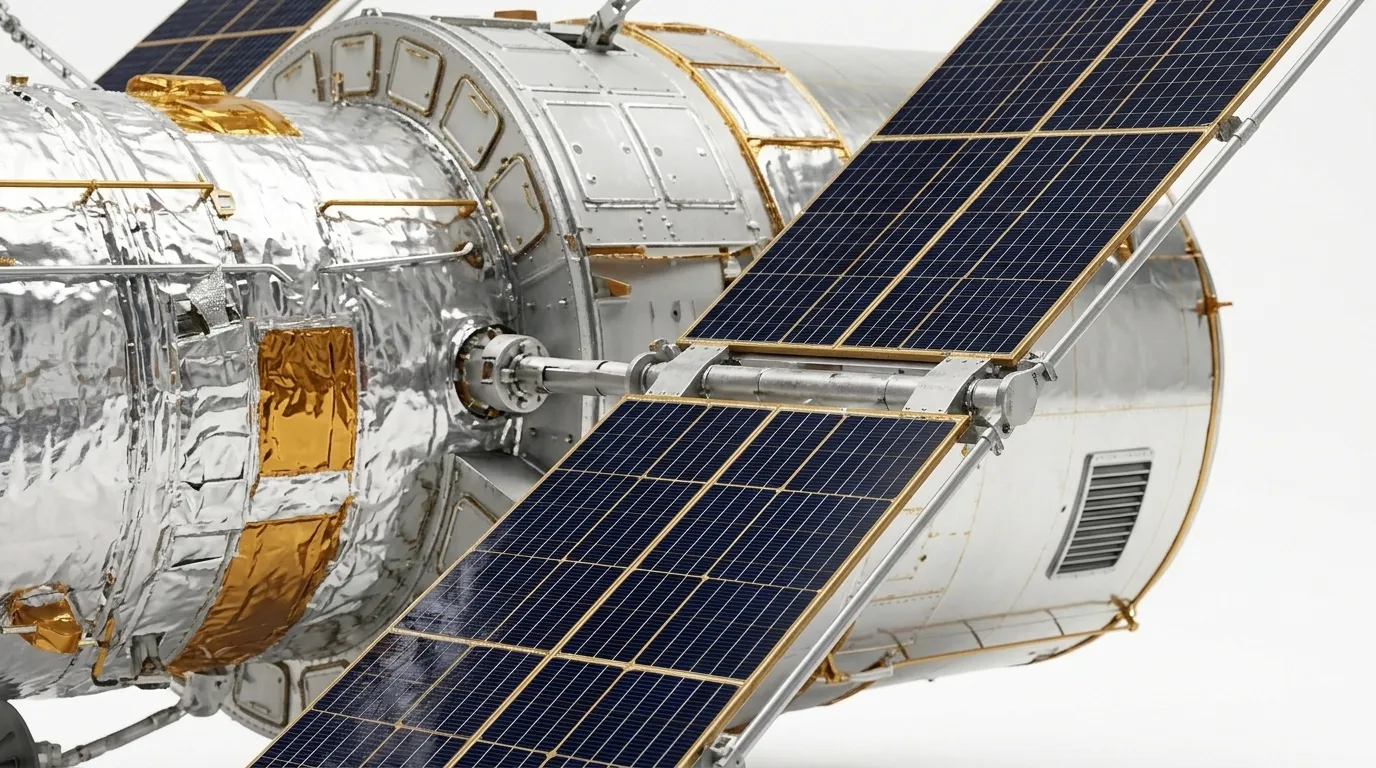
The most scientifically productive instrument in the history of astronomy. Hubble determined the age of the universe, confirmed the existence of supermassive black holes, and produced images that became cultural icons. Five Space Shuttle servicing missions kept it alive for over three decades.
History
Named after astronomer Edwin Hubble, the telescope was conceived in the 1970s but not launched until April 1990 aboard Space Shuttle Discovery. The initial elation turned to horror when the first images came back blurry -- a manufacturing error had left the primary mirror with a spherical aberration of just 2.2 micrometers, roughly one-fiftieth the width of a human hair. The most expensive scientific instrument ever built was nearsighted.
The fix, installed during a dramatic Shuttle servicing mission in December 1993 (STS-61), required astronauts to install corrective optics -- essentially eyeglasses for the telescope -- in a procedure that lasted five days and involved five spacewalks totaling 35 hours. The repair worked perfectly, and the corrected Hubble immediately began producing images of unprecedented clarity.
Over the following decades, Hubble produced some of the most iconic images in the history of science: the Pillars of Creation in the Eagle Nebula, showing columns of interstellar gas where new stars are being born; the Hubble Deep Field, revealing thousands of galaxies in a patch of sky the size of a grain of sand held at arm''s length; and detailed views of planetary nebulae, galaxies colliding, and the remnants of supernovae.
Hubble''s scientific contributions are equally remarkable. It measured the expansion rate of the universe with unprecedented precision, helping to determine its age at approximately 13.8 billion years. It confirmed the existence of supermassive black holes at the centers of galaxies. It observed the aftermath of Comet Shoemaker-Levy 9''s impact with Jupiter. Four additional servicing missions in 1997, 1999, 2002, and 2009 replaced instruments and extended the telescope''s life far beyond original projections. After more than 34 years in orbit, Hubble continues to make observations, though its gyroscopes are failing and no further servicing missions are planned.
Timeline
Launch Heritage
- Deep Field image
- Mirror fix (STS-61)
- Hubble Ultra Deep Field
- Age of universe measurement
Technical Specifications
Performance
Dimensions
Mass
Mission
Power & Systems
Source: NASA/ESA/STScI
Tags
Designed by NASA/GSFC / Lockheed Martin / Perkin-Elmer