Ariane 5
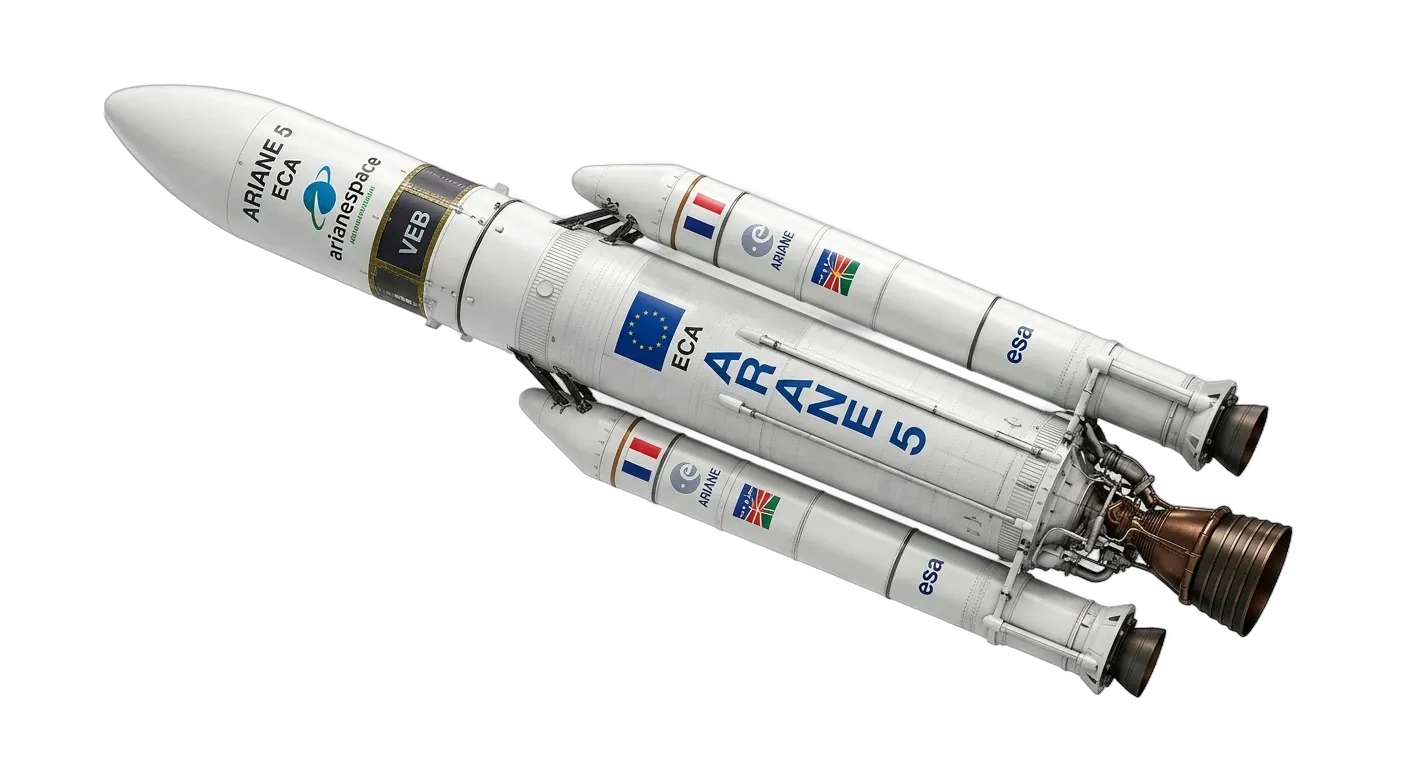
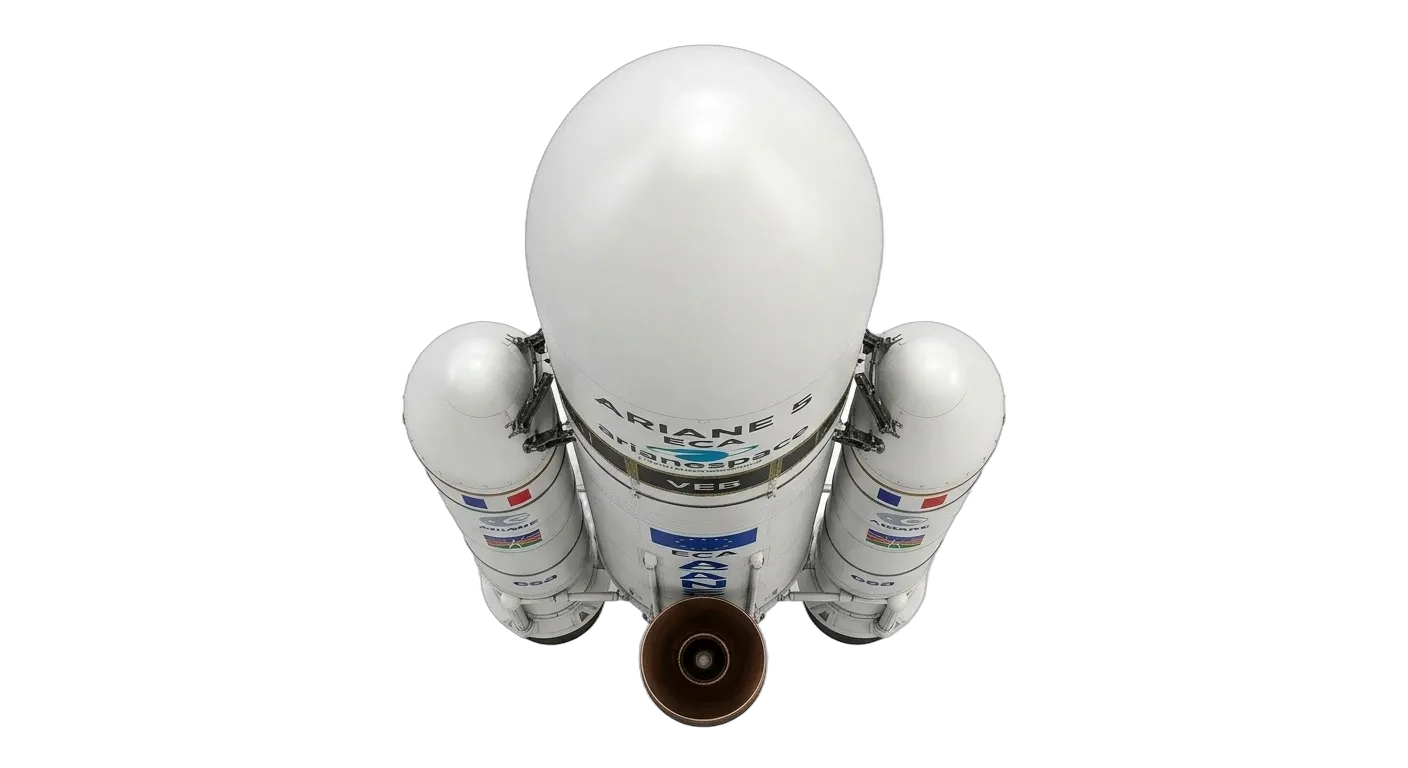
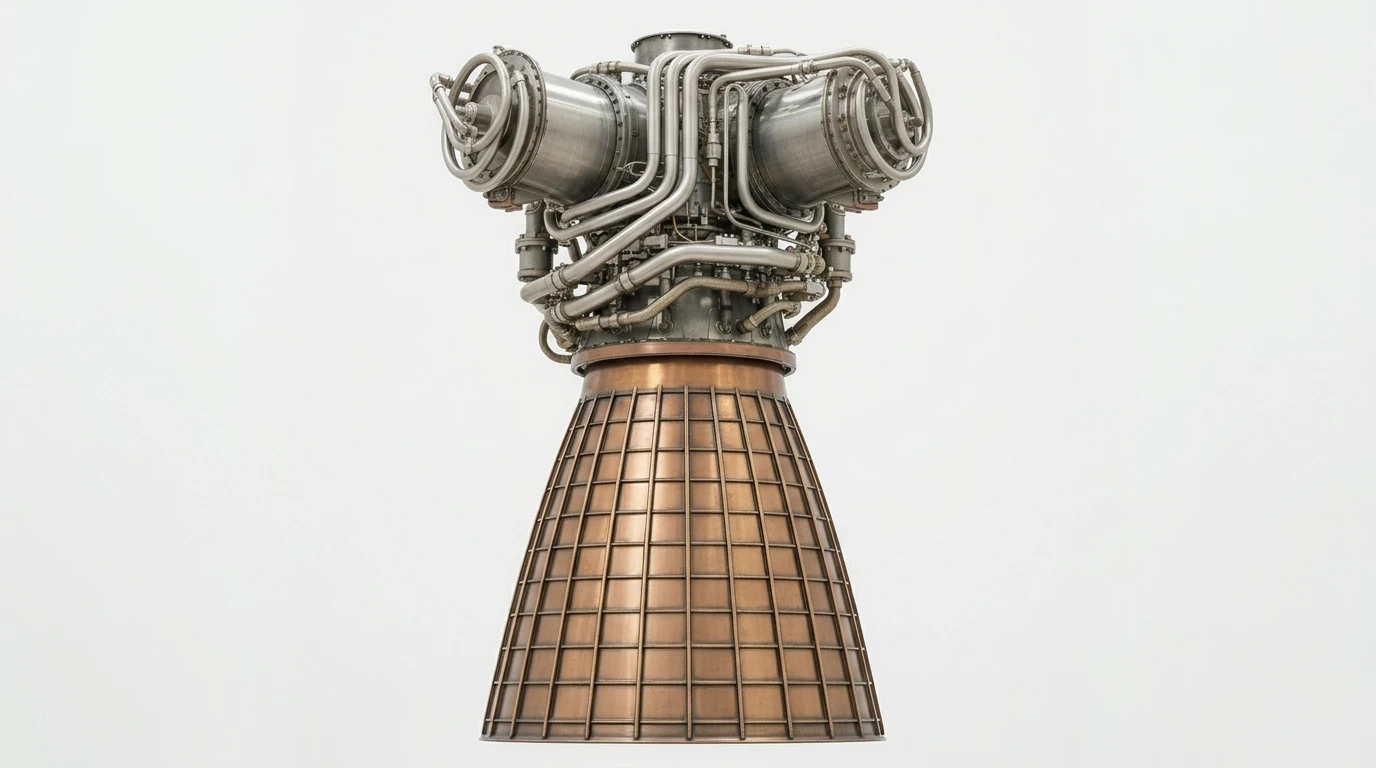
Europe''s heavy-lift workhorse for 27 years. Ariane 5 launched the James Webb Space Telescope so precisely that it doubled the telescope''s expected operational lifetime. It dominated the commercial geostationary satellite market and flew 117 missions.
History
Ariane 5 was developed by the European Space Agency and operated by Arianespace as the successor to the highly successful Ariane 4. Its maiden flight in June 1996 ended in spectacular failure when a software error -- a 64-bit to 16-bit conversion overflow in the inertial reference system -- caused the rocket to veer off course 37 seconds after liftoff and self-destruct. The failure became a classic case study in software engineering.
Once operational, Ariane 5 became the backbone of European space access and the dominant launcher in the commercial geostationary satellite market. Its ability to launch two satellites simultaneously on a single flight made it economically competitive despite higher per-launch costs than single-payload competitors.
Ariane 5''s crowning achievement came on December 25, 2021, when it launched the James Webb Space Telescope. The launch was so precise that JWST used far less fuel than budgeted for trajectory corrections, effectively doubling the telescope''s expected operational lifetime from 10 to 20+ years. The final Ariane 5 flew on July 5, 2023, closing a 27-year career with 117 flights.
Timeline
Launch Heritage
- James Webb Space Telescope
- Rosetta
- BepiColombo
- Herschel/Planck
Technical Specifications
Propulsion
Performance
Dimensions
Mass
Mission
Power & Systems
Source: Arianespace
Tags
Designed by CNES / Arianespace