The Engines That Conquered Gravity: A History of Rocket Propulsion
From Robert Goddard's liquid-fueled prototype to SpaceX's methane-burning Raptor, the story of rocket engines is the story of human ingenuity pushing against the laws of physics.
On March 16, 1926, in a snow-covered field in Auburn, Massachusetts, Robert Goddard lit the fuse on a contraption that looked more like plumbing than a rocket. It flew for 2.5 seconds, reached an altitude of 41 feet, and landed in a cabbage patch. It was the first liquid-fueled rocket in history, and it changed everything.
The next leap came from darker circumstances. Wernher von Braun's V-2, developed in Nazi Germany, was the first long-range guided ballistic missile and the first human-made object to reach the boundary of space. Its engine burned ethanol and liquid oxygen, producing 56,000 pounds of thrust. After the war, captured V-2s and the engineers who built them seeded the rocket programs of both the United States and the Soviet Union.
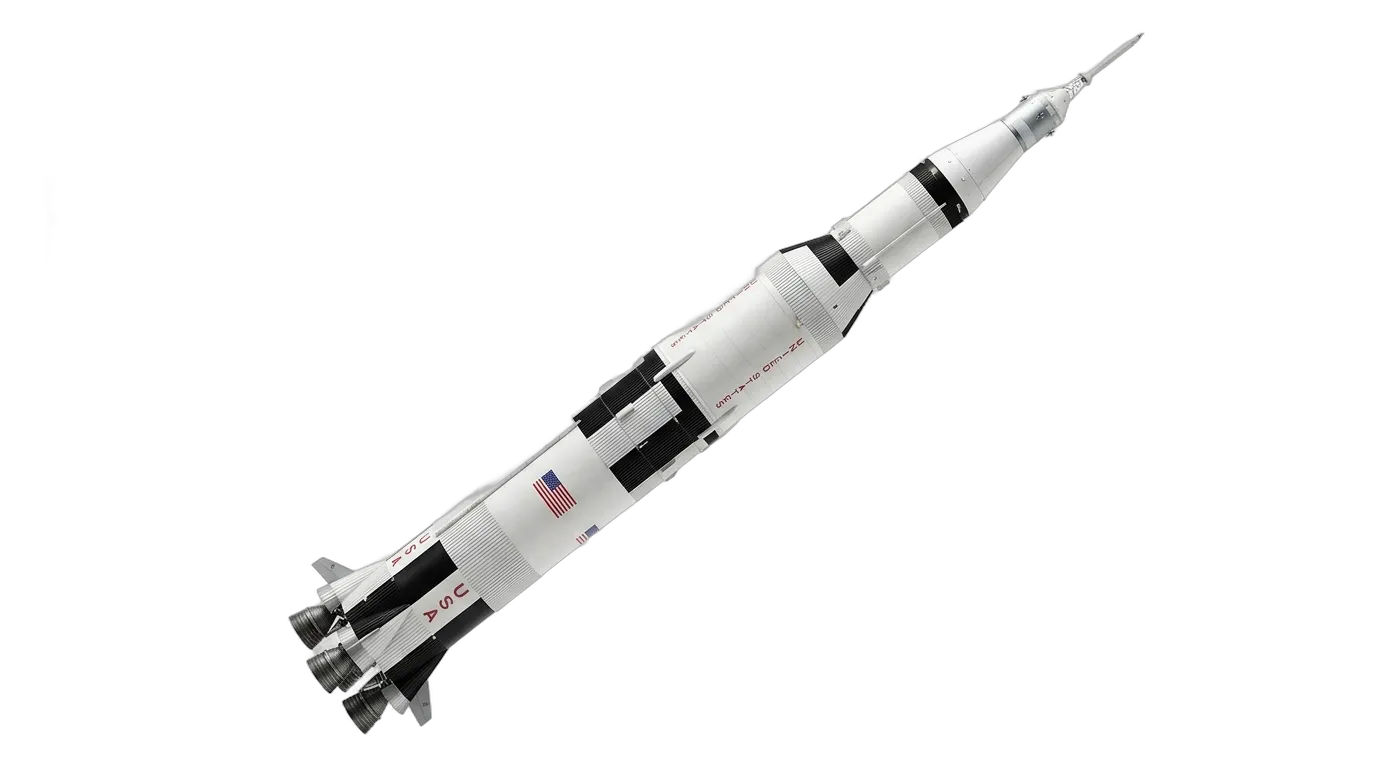
The Saturn V's F-1 engine remains one of the most extraordinary machines ever built. Each of the five first-stage engines produced 1.5 million pounds of thrust by burning kerosene and liquid oxygen at a rate of nearly three tons per second. The turbopump alone generated more horsepower than a nuclear submarine. Rocketdyne engineers solved combustion instability -- explosions within the engine -- by detonating small bombs inside the combustion chamber during tests and studying how the flames recovered. Nothing built before or since has matched the F-1's raw power in a single chamber.
The Space Shuttle Main Engine, later renamed the RS-25, represented a different philosophy. Instead of brute force, it prioritized efficiency and reusability. Running on liquid hydrogen and liquid oxygen at extreme pressures, it was the first reusable rocket engine, designed to fly 55 missions. Its staged combustion cycle extracted nearly every joule of energy from its propellants, achieving an efficiency that remained the benchmark for decades.
SpaceX's Merlin engine democratized access to orbit through mass production and iterative improvement. Its successor, the Raptor, burns methane instead of kerosene -- a fuel that can theoretically be manufactured on Mars. The Raptor is the first full-flow staged combustion engine to fly, a cycle that every major rocket company attempted and abandoned over the previous fifty years. Each generation of rocket engine solved the same fundamental problem -- creating enough controlled thrust to escape Earth's gravity -- with increasing elegance.