Opportunity (MER-B)
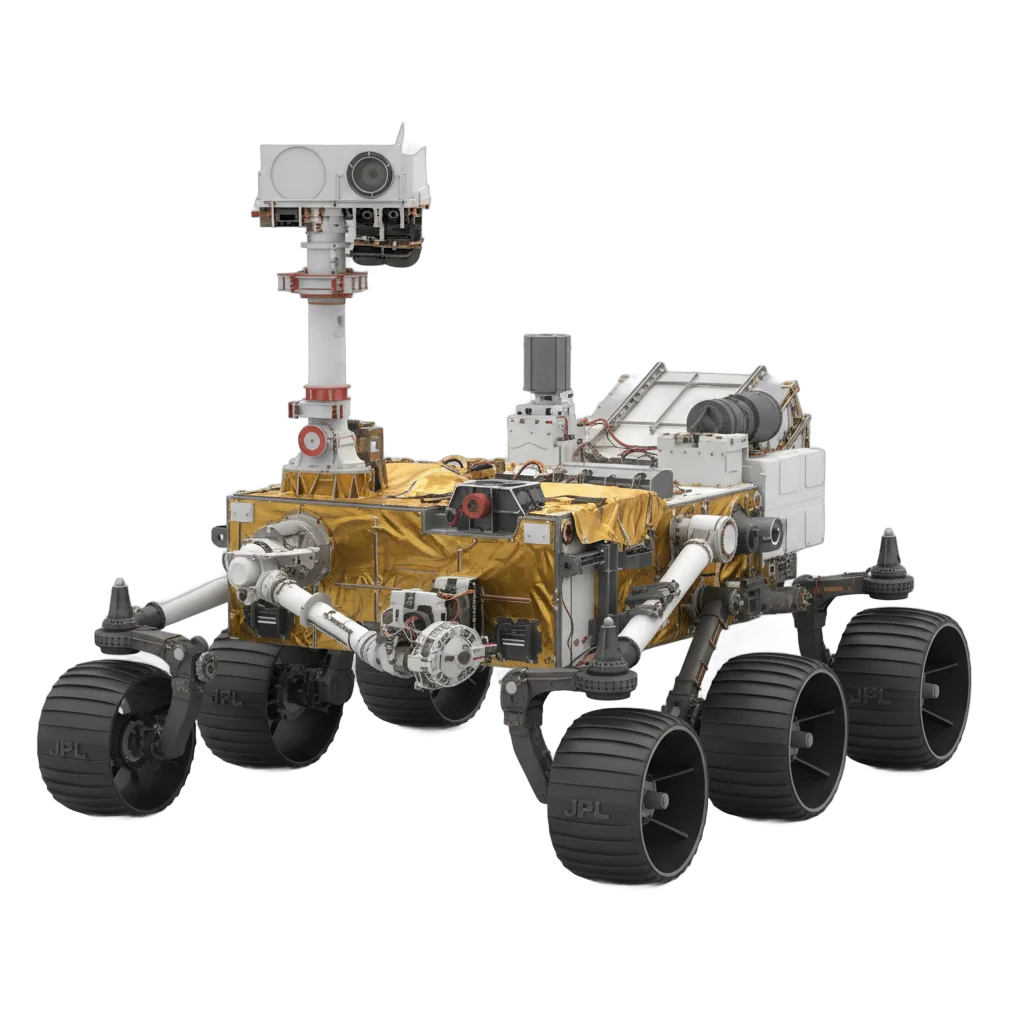
Designed for a 90-day mission, Opportunity operated on Mars for nearly 15 years and drove over 28 miles across the Martian surface. It discovered definitive evidence that Mars once had standing liquid water, finding hematite ''blueberries'' and sedimentary rock formations.
History
Opportunity landed on Meridiani Planum on January 25, 2004, bouncing to a stop inside a small crater later named Eagle Crater. Within days of landing, the rover made a discovery that justified the entire mission: layers of sedimentary rock containing hematite spherules (nicknamed blueberries) and mineral formations that could only have been created in the presence of standing water.
The rover was designed for a 90-sol (Martian day) mission but exceeded that target by a factor of 55. Over nearly 15 years, Opportunity drove 28.06 miles across the Martian surface, setting the record for the longest distance driven by any off-Earth vehicle. It explored multiple craters, each revealing different chapters of Mars''s geological history.
Opportunity''s journey took it from Eagle Crater to Endurance Crater, then on to Victoria Crater, and finally to Endeavour Crater, a 14-mile-wide impact basin where it found clay minerals indicating ancient water that was far less acidic than the water at its landing site -- more hospitable to life.
A planet-encircling dust storm in June 2018 blocked sunlight from reaching Opportunity''s solar panels, and the rover fell silent on June 10, 2018. NASA spent months trying to reestablish contact. On February 13, 2019, after over a thousand recovery attempts, NASA declared the mission complete. The last command sent to Opportunity was the song ''I''ll Be Seeing You'' by Billie Holiday.