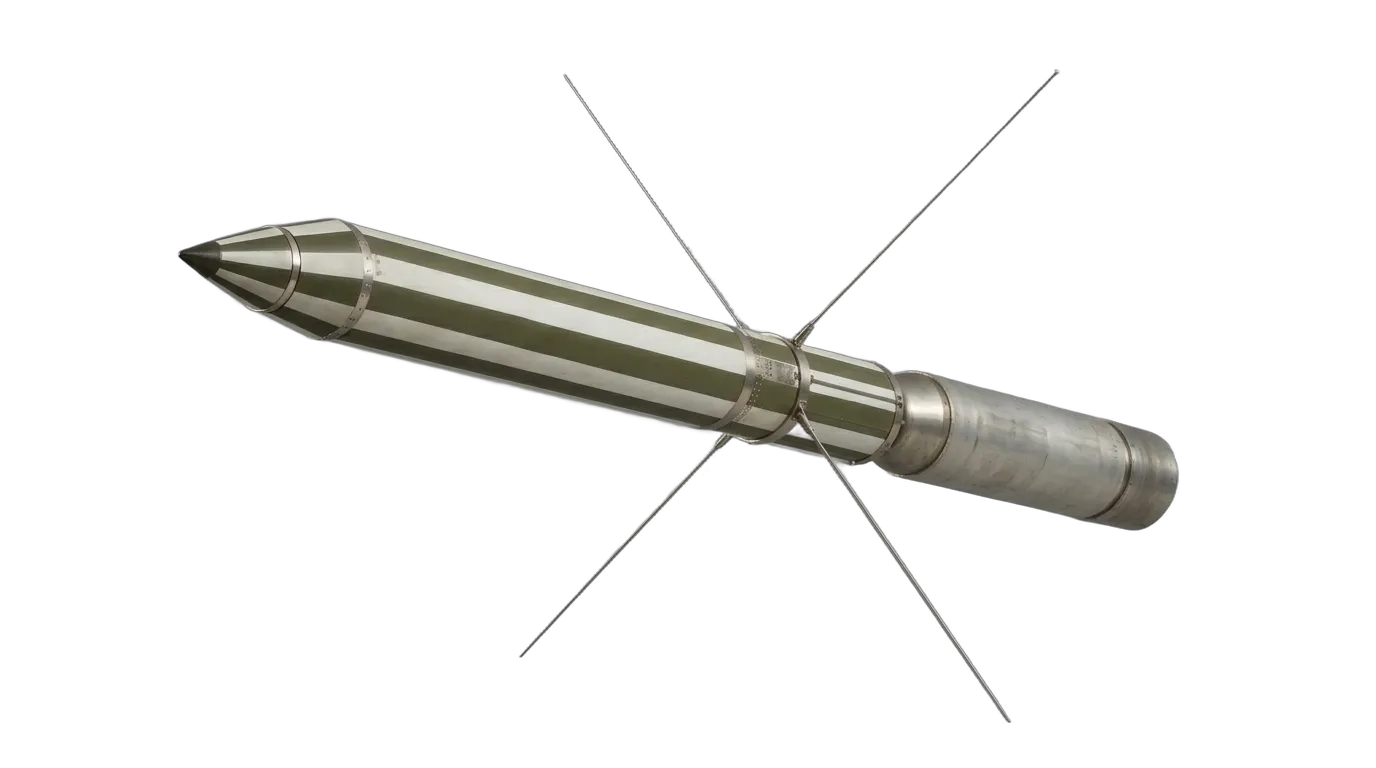
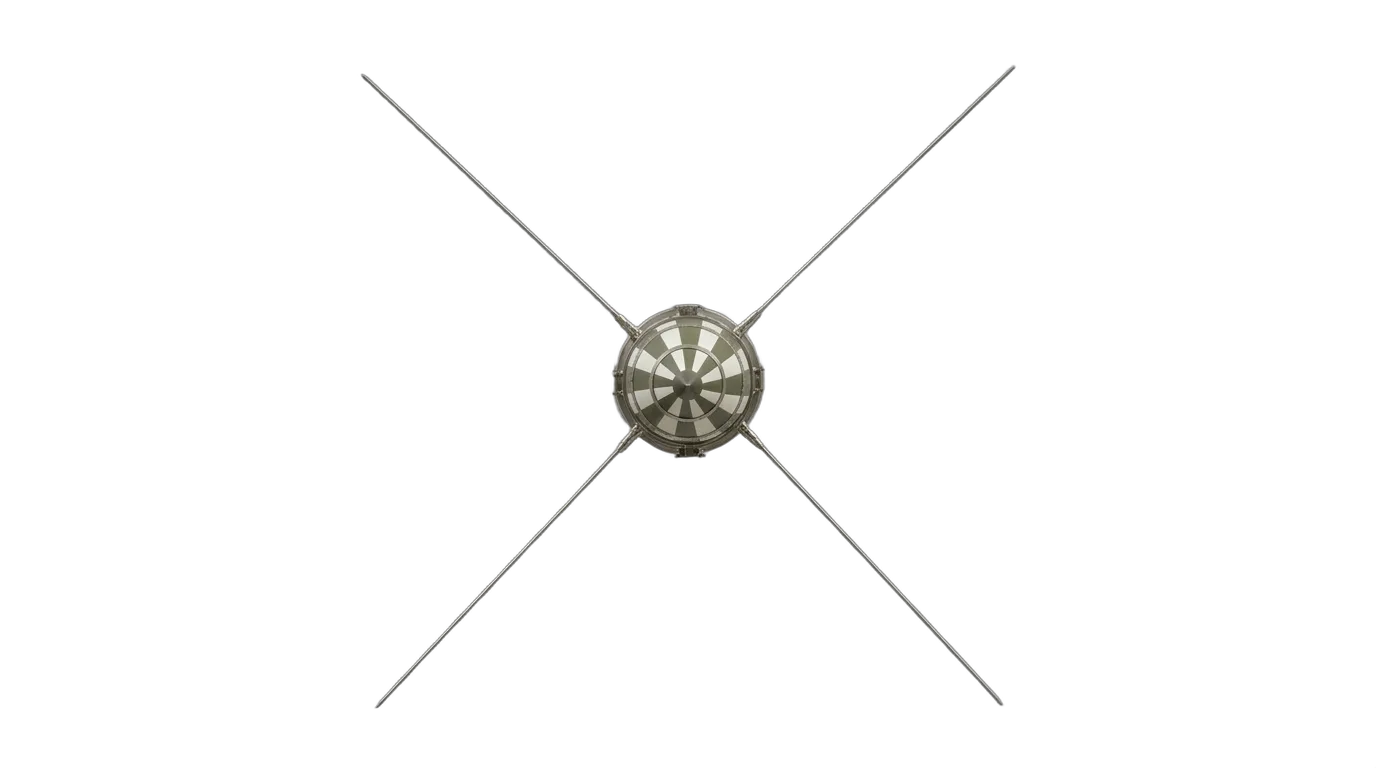
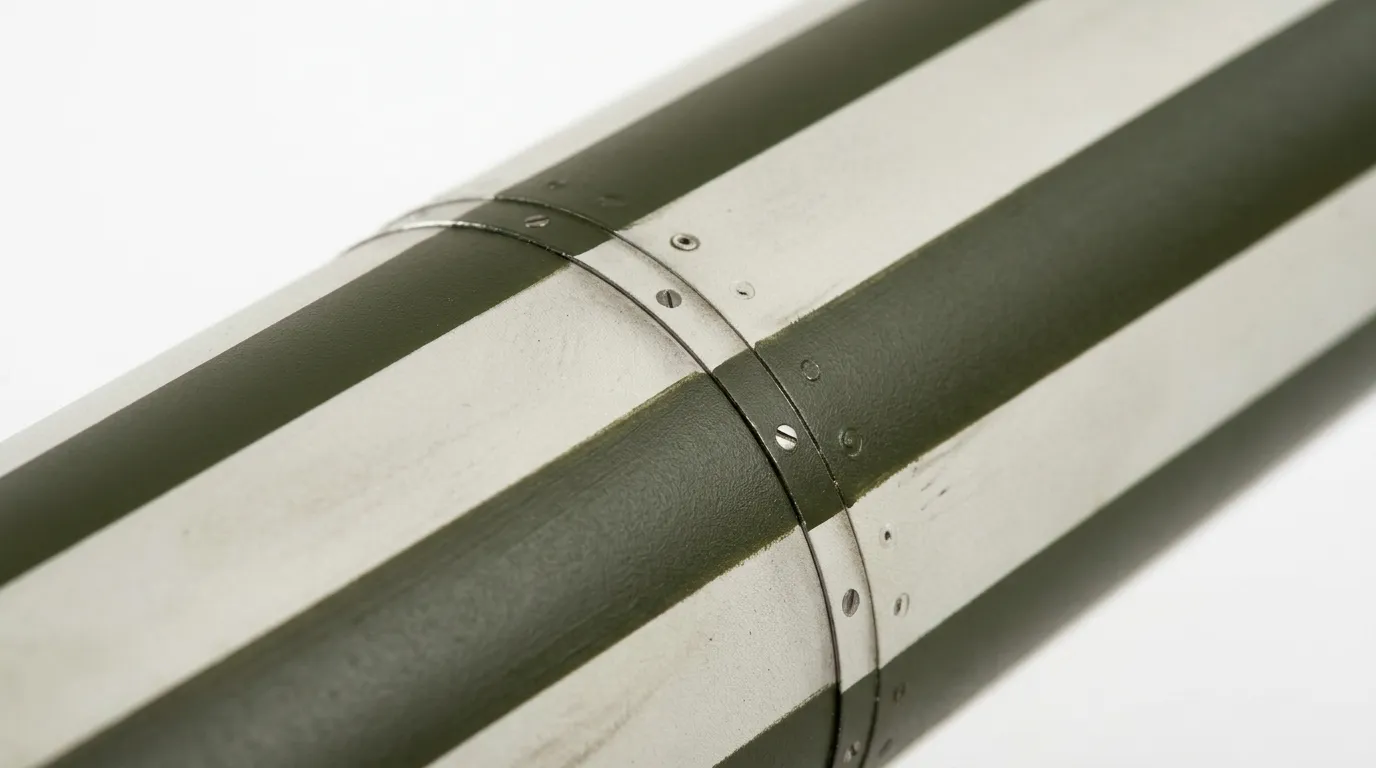
The first American satellite and the spacecraft that discovered the Van Allen radiation belts encircling Earth. Launched in response to Sputnik, Explorer 1 demonstrated that the United States could match Soviet space capabilities.
History
Explorer 1 was launched on January 31, 1958, atop a Juno I rocket (a modified Redstone ballistic missile with upper stages) from Cape Canaveral. The launch came less than four months after Sputnik 1 and two months after the humiliating failure of America''s first satellite attempt, Vanguard TV3, which exploded on the launch pad in front of live television cameras.
The satellite was small -- just 31 pounds, including 18 pounds of instruments designed by James Van Allen of the University of Iowa. Its primary instrument was a Geiger counter designed to measure cosmic ray intensity. When the satellite reached orbit, the Geiger counter produced readings that were initially baffling: at certain points in the orbit, the instrument seemed to stop functioning entirely, registering zero counts.
Van Allen hypothesized that the instrument was not failing but was being overwhelmed by radiation so intense that it saturated the detector. He was right: Explorer 1 had discovered the Van Allen radiation belts, zones of charged particles trapped by Earth''s magnetic field. This was the first major scientific discovery of the Space Age and demonstrated that even small satellites could produce transformative science.
Launch Heritage
- First US satellite
- Discovery of Van Allen radiation belts
Technical Specifications
Performance
Dimensions
Mass
Mission
Power & Systems
Source: NASA/JPL
Tags
Designed by James Van Allen