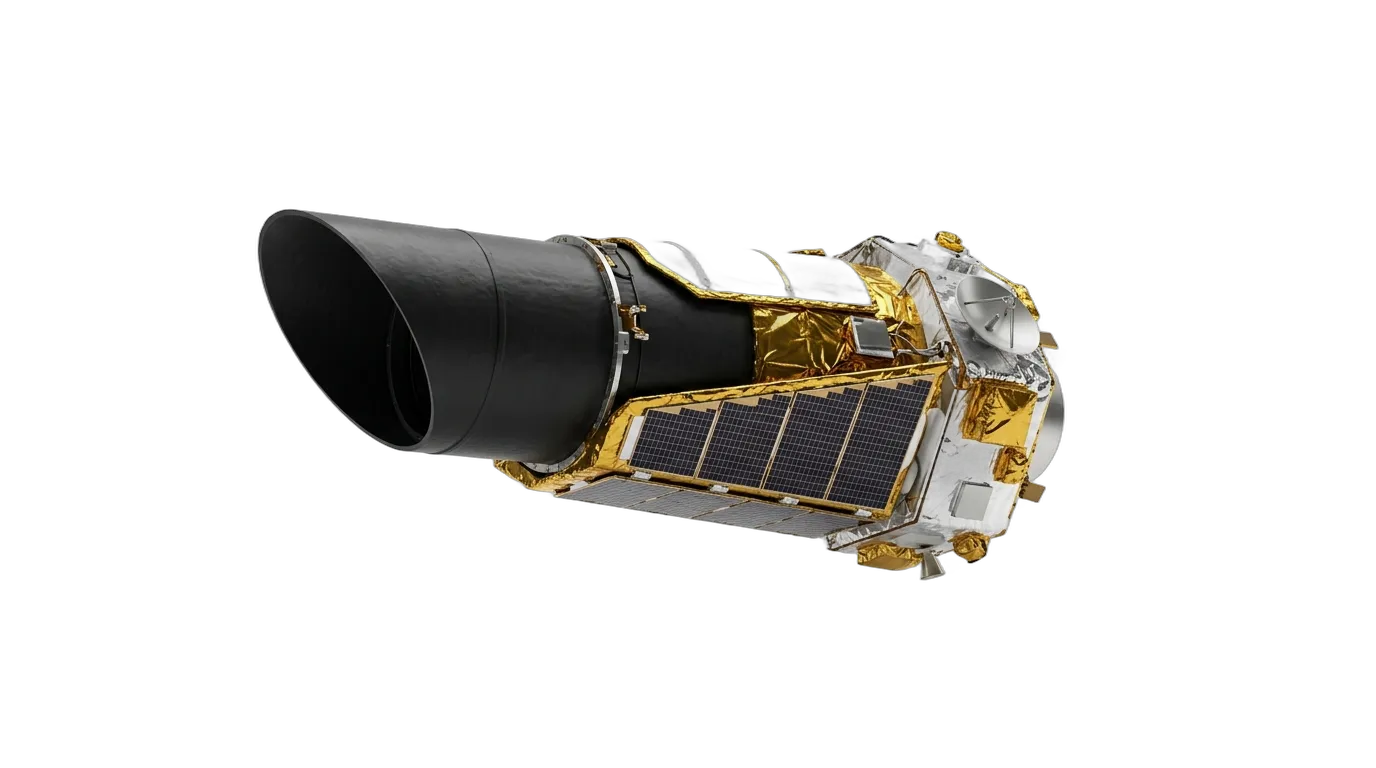
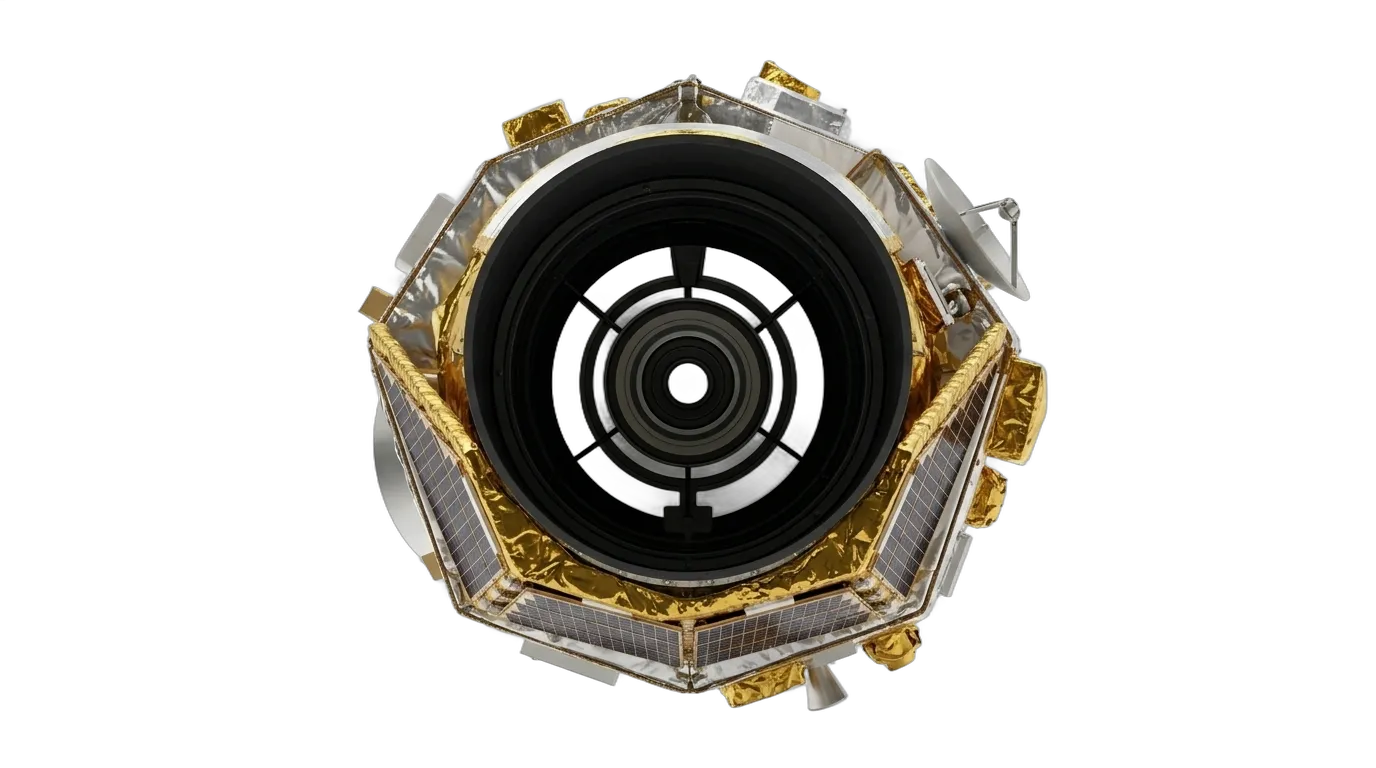
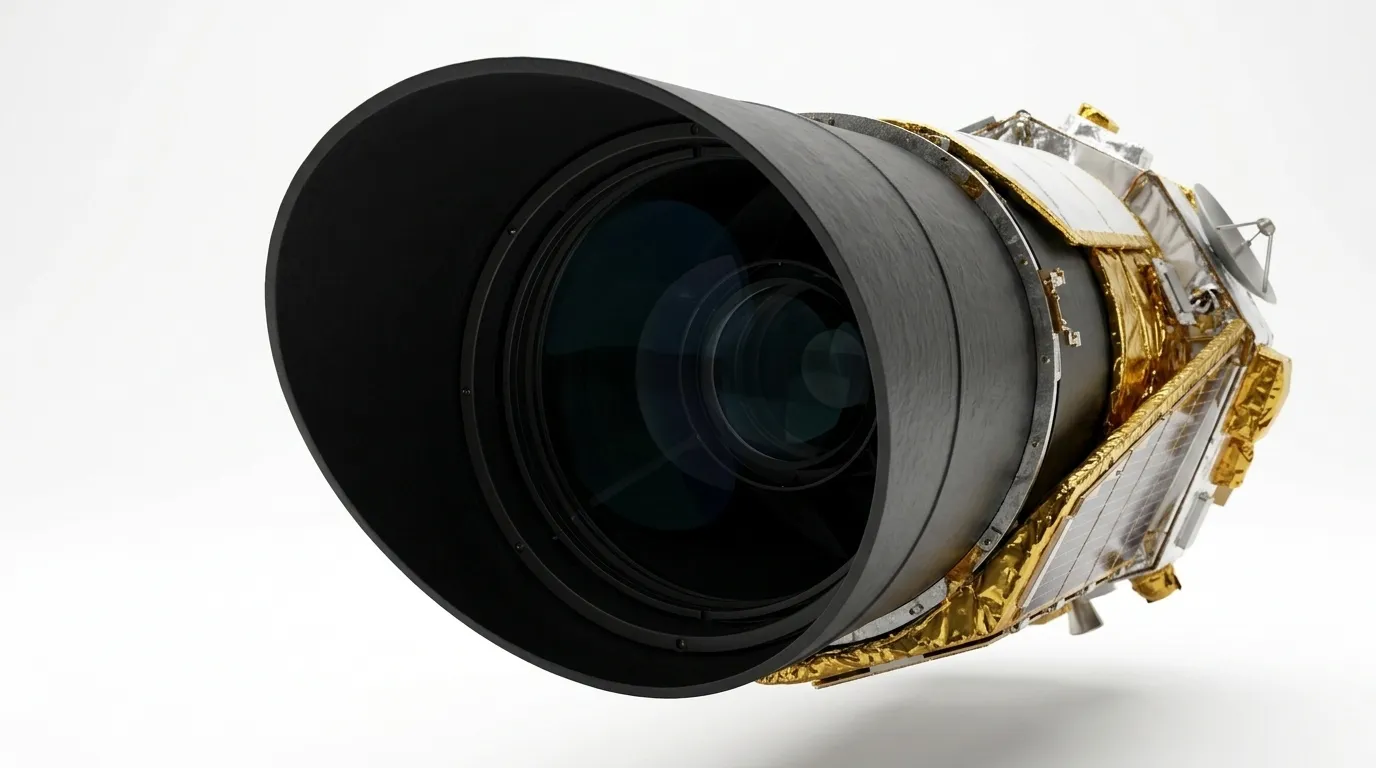
Discovered over 2,600 confirmed exoplanets by staring at 150,000 stars and detecting the tiny dimming caused by a planet crossing in front of its star. Kepler proved that planets are common in the galaxy -- and that Earth-sized worlds in habitable zones are not rare.
History
The Kepler Space Telescope launched on March 7, 2009, with a single, audacious mission: determine how common planets are around other stars. It stared continuously at a single patch of sky in the constellation Cygnus, monitoring the brightness of approximately 150,000 stars with extraordinary precision, looking for the tiny dip in light caused by a planet transiting in front of its star.
Kepler''s photometer could detect brightness changes as small as 20 parts per million -- equivalent to noticing the dimming caused by a flea crawling across a car headlight viewed from several miles away. Over its four-year primary mission, it detected thousands of planet candidates, which were then confirmed through follow-up observations.
In 2013, the failure of two of Kepler''s four reaction wheels ended its ability to point precisely at its original star field. Rather than abandon the spacecraft, engineers devised a clever plan to use solar radiation pressure as a virtual third reaction wheel, enabling a new mission called K2 that observed different star fields along the ecliptic.
By the time Kepler''s fuel ran out in October 2018, it had discovered 2,662 confirmed planets and thousands more candidates still being analyzed. Its data revealed that, on average, every star in the Milky Way has at least one planet. Rocky planets in the habitable zone -- where liquid water could exist -- are far more common than anyone had expected. Kepler fundamentally changed our understanding of humanity''s place in the cosmos.
Timeline
Launch Heritage
- Discovered 2600+ exoplanets
- K2 extended mission
- Kepler-442b habitable zone
Technical Specifications
Performance
Dimensions
Mass
Mission
Power & Systems
Source: NASA Ames
Tags
Designed by NASA / Ball Aerospace