Pale Blue Dot: The Photo That Changed How We See Ourselves
From 3.7 billion miles away, Voyager 1 turned its camera back toward home and captured Earth as a fraction of a pixel. The image contained no scientific data. It became the most profound photograph ever taken.
Introduction
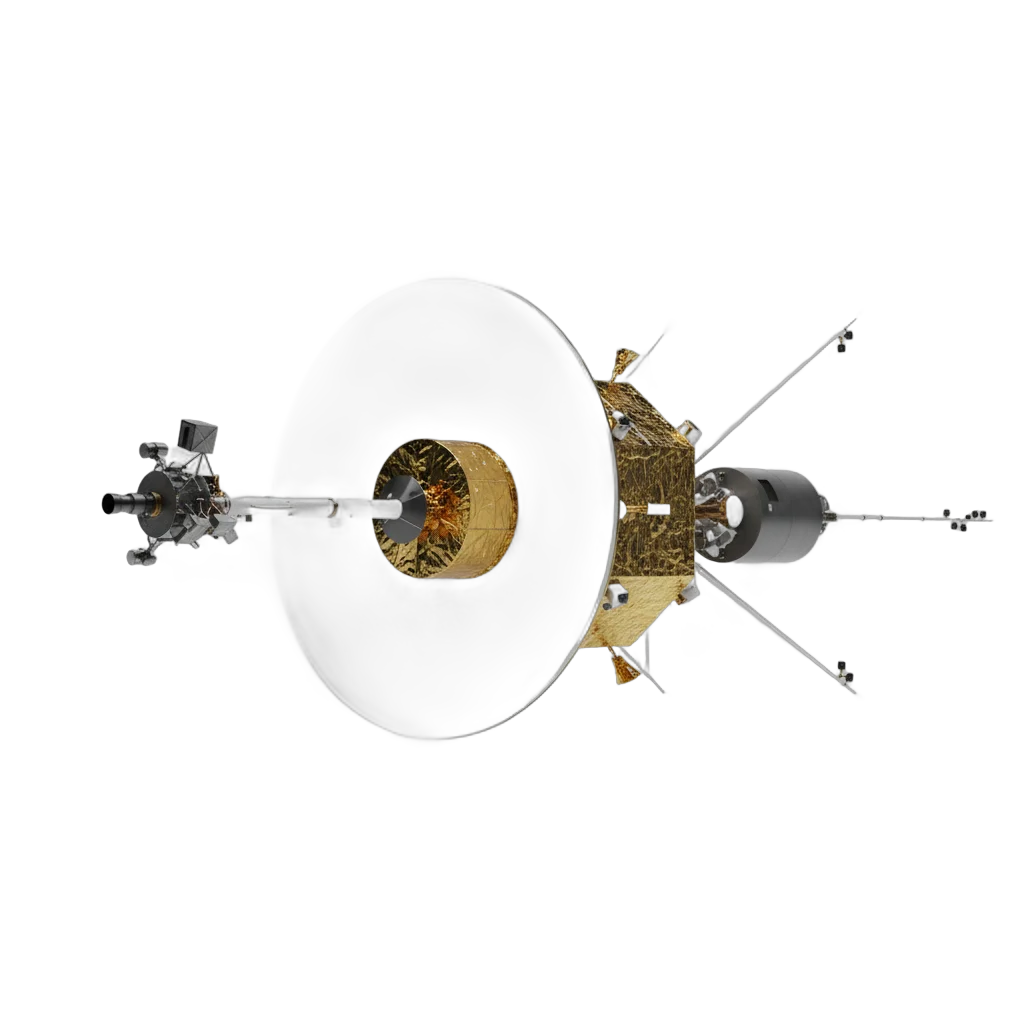
By 1989, Voyager 1 had completed its planetary mission. It had transformed our understanding of Jupiter and Saturn, discovered volcanoes on Io and the complexity of Saturn's rings, and was now heading toward the outer boundary of the solar system with its instruments still functioning. Its cameras, having served their purpose, were about to be shut down permanently to conserve power.
The Request
Carl Sagan had an idea. He wanted Voyager to turn its camera around -- to look back at the inner solar system from a distance that no camera had ever achieved. Some at NASA objected. The camera was a narrow-angle instrument designed to photograph planets and moons at relatively close range. Pointing it back toward the inner solar system meant aiming near the Sun, which risked damaging the vidicon tube permanently. And there was no scientific value in the exercise. Earth, from that distance, would be less than a pixel -- a meaningless speck producing no usable data.
Sagan persisted. He had been advocating for the photograph since 1981, eight years before NASA finally agreed. On February 14, 1990 -- Valentine's Day -- Voyager 1's narrow-angle camera captured a series of 60 frames, creating a mosaic portrait of the solar system from 3.7 billion miles away. The camera was then shut down forever.
A Pixel of Light
Most of the frames showed nothing remarkable -- the black void of space, with scattered sunlight creating diagonal rays across the images. In one frame, Earth appeared. It was a pale blue dot, occupying less than a single pixel, caught in a band of scattered sunlight from the camera's optics. The image was grainy, low-contrast, and technically unremarkable. By any objective measure, it was a bad photograph. There was no detail, no feature, no information that a planetary scientist could use.
It became the most profound image ever taken.
The pale blue dot contained everything -- every human being who had ever lived, every war fought, every cathedral built, every love letter written, every act of kindness and cruelty in the entire history of the species. The Earth, seen from the edge of the solar system, was smaller than a grain of sand held at arm's length. The image made the planet's fragility not an abstraction but a visible, undeniable fact.
Sagan's Reflection
Carl Sagan wrote about the photograph in his 1994 book "Pale Blue Dot," and his words became one of the most quoted passages in the history of science:
"Look again at that dot. That's here. That's home. That's us. On it everyone you love, everyone you know, everyone you ever heard of, every human being who ever was, lived out their lives. The aggregate of our joy and suffering, thousands of confident religions, ideologies, and economic doctrines, every hunter and forager, every hero and coward, every creator and destroyer of civilization, every king and peasant, every young couple in love, every mother and father, hopeful child, inventor and explorer, every teacher of morals, every corrupt politician, every superstar, every supreme leader, every saint and sinner in the history of our species lived there -- on a mote of dust suspended in a sunbeam."
Astronauts who have seen Earth from orbit describe a cognitive shift that writer Frank White named the "Overview Effect" -- a sudden, visceral understanding of the planet's unity and fragility that fundamentally changes how they see the world. Most people will never orbit the Earth. Voyager gave the Overview Effect to everyone.
The spacecraft that took the photograph is now more than 15 billion miles from home, still moving outward at 38,000 miles per hour. The pale blue dot behind it grows fainter every day. Sagan's words remain: "To me, it underscores our responsibility to deal more kindly with one another, and to preserve and cherish the pale blue dot, the only home we've ever known."